2025 Golden Pin Design Awards Ceremony Unveils Best Design and Special Award Winners

The 2025 Golden Pin Design Award Ceremony—one of the most prominent events in the Asian design community—was held on December 5 at the Taipei Performing Arts Center. This year’s Golden Pin Design Award and Golden Pin Concept Design Award brought together entries from 28 countries and regions.
After rigorous evaluation, the jury selected 22 winners of the Golden Pin Design Award – Best Design of the Year, 3 winners of the Golden Pin Design Award – Special Annual Award, and 3 winners of the Golden Pin Concept Design Award – Best Concept of the Year.
The Honorary Award was presented to Professor Apex Lin, Pang-Soong—Chair Professor at Asia University and Emeritus Professor at National Taiwan Normal University—in recognition of his long-standing contributions to design practice, education, and international exchange in Taiwan.
 MOEA Deputy Minister Chin-Tsang Ho presents the Honorary Award to Professor Apex Lin, Pang-Soong.
 This year’s ceremony was hosted by Taiwanese entertainers A-Ken and Patty Wu, who brought a fresh and dynamic on-stage partnership.
 HUSH, winner of the 34th Golden Melody Awards for Best Mandarin Male Singer, opened the ceremony with a live performance.
 Taiwan’s B.DANCE delivered a captivating performance at the ceremony, using its signature movement style to express the power and dynamism of design.
 Singer-songwriter Shi Shi returned to the Golden Pin stage this year with a heartfelt performance.
 Design luminaries Don Norman and IDSA president Surya Vanka joined the ceremony as award presenters, offering warm recognition to this year’s top honorees.
 Japanese design master Akira Minagawa, one of this year’s final jury members, returned to Taiwan to present awards.
2025 Golden Pin Design Award: Spotlighting Innovation in Sustainability, Technology, Society, and Culture
Across its four award categories, the 2025 Golden Pin Design Award recognized 429 Design Mark recipients. From these, 90 projects advanced to the final round for the Best Design of the Year, and 22 ultimately emerged as winners—representing Taiwan, China, Hong Kong, Japan, Germany, the United States, and Poland.
Final selection juror Uwe Cremering, CEO of iF International Forum Design GmbH, described this year’s evaluation process in Taiwan as both inspiring and deeply rewarding, citing the remarkable diversity and depth of the submissions. He noted that many shortlisted works excelled not only in aesthetics and innovation but also in addressing real-world needs. The jury placed particular emphasis on user-centered thinking, clarity and coherence in execution, and the ability to create meaningful impact—key qualities shared by this year’s award-winning designs.
-
Product Design Category
This year’s Product Design winners highlighted how design can address real-world challenges with clarity and purpose. Aquacendo’s “LightUp Filtered Bottle” (Yee Gee International Co., Ltd., Taiwan) combines water filtration with solar-powered LED to support communities lacking clean water or stable electricity. Germany’s “Sonnenglas® SOMO Solar Lighting System” (Sonnenglas GmbH) offers a safe, sustainable alternative to kerosene lighting through a modular solar-powered design—hand-assembled in a Fair Trade–certified factory in South Africa to create local employment and skills development.
Innovation in design–technology integration also stood out. The “Merrylock MK6070 Household Air-threading Combo Sewing Machine” (Tsang Yu Industrial Co., Ltd., Taiwan) features thoughtful ergonomic engineering that enables non-professionals to achieve precise, high-quality sewing. The “OASSAY FlexFlow Water Purifier” (Shenzhen MeetElephant Technologies Co., Ltd., China) uses a smart modular configuration to deliver a more adaptable and portable purification experience.
Two personal mobility products were additionally honored for their engineering excellence: the high-performance “ARIA” road bike by TROXUS (U.S.) and the “PXID P6 Tidal Current Electric Moped” by Huaian PX Intelligent Manufacturing Co., Ltd. (China), both of which impressed the jury with their innovative structures and refined craftsmanship.
 Germany’s Sonnenglas GmbH received a Best Design of the Year award for its solar lighting system, with team representatives attending the ceremony in Taipei.
 Representatives of the design team behind “ARIA,” the high-performance road bike by TROXUS, accepted the award on stage.
-
Communication Design Category
This year’s Communication Design winners highlighted a wide range of creative voices, demonstrating how visual expression can reshape cultural narratives and strengthen identity. Aaron Nieh Workshop (Taiwan) received two distinctions: “ExAvantGarde & NewOldSchool|Album Series Packaging Design” for OneSong Orchestra, celebrated for its playful and engaging visual language, and the “Visual Identity for the Taichung Green Museumbrary”, praised for its elegant and precisely articulated interpretation of the institution’s character.
JOEFANGSTUDIO (Taiwan) was recognized for its “Nausicaä of the Valley of the Wind – Taiwan Exclusive Poster Design”, which offers a fresh reinterpretation of the beloved classic and creates strong emotional resonance for viewers. Additional award-winning works demonstrated how cultural insight can be transformed into compelling visual storytelling, including So Creative Studio’s “FULL MOON FESTIVAL BY TRADITION NOW” (China), which blends Eastern spiritual motifs with Western aesthetics; for&st’s “Minna no Tsukemono” (Hong Kong), which reimagines Chinese character structures to express the essence of pickling culture; and Whitefern Design’s “Bau-Jie Agarwood Brand Design” (Taiwan), which employs refined paper-pulp craftsmanship to convey a brand’s artisanal identity.
International submissions also stood out. TOFU Studio’s “CLEAN CITY GDANSK” (Poland) uses innovative, minimalist graphics to clearly communicate circularity and sustainability across cultures, while 6D-K’s rebranding of the century-old confectionery brand “FUJIYA” (Japan) distills its iconic character into a sophisticated and contemporary identity. These works collectively demonstrate how communication design can bridge cultures, reinterpret traditions, and animate brand narratives with clarity and imagination.
 Poland’s TOFU Studio received the Best Design of the Year for the second time, with team representatives traveling to Taiwan for the ceremony to express their heartfelt gratitude.
 Aaron Nieh Workshop earned a Best Design of the Year for the visual identity of “Taichung Green Museumbrary,” elegantly capturing the venue’s spirit through refined, minimalist linework.
 Japan’s 6D-K Design Studio won a Best Design of the Year award for its refreshed FUJIYA identity. The designer thanked the client and the Golden Pin jury for the recognition.
-
Spatial Design Category
This year’s winners illustrate how design can respond to context with clarity, imagination, and refined technical control. “Taichung Green Museumbrary” (Taiwan) by Japanese firm SANAA was recognized for its open and fluid spatial concept, which unites library and museum functions into a fresh model for contemporary public architecture and cultural venues.
Two additional works demonstrate the creative possibilities of designing within tight constraints. The Architecture Museum "Xinyi Street of Coral Stone" by AS. Studio (Taiwan) retains the essential structure of a historic residence while revitalizing it through contemporary construction methods and spatial strategies, giving new life to an architectural legacy. Meanwhile, "Tenjincho Place" by Hiroyuki Ito Architects (Japan) transforms a highly restricted urban site through precise, finely calibrated planning, resulting in a residential environment that feels unexpectedly open and inviting.
International highlights also include "LACY STEPS" by Trop Company Limited—a Thailand–China architectural firm—which employs a strikingly minimal staircase to connect three floors and create a fresh, memorable spatial experience.
 “LACY STEPS” by Trop Company Limited received the Best Design of the Year for its striking all-white staircase that transforms a courtyard into a memorable spatial experience.
-
Integration Design Category
This year’s Integration Design winners demonstrate how cross-disciplinary collaboration can unlock new forms of innovation across culture, sustainability, and user experience. "Formosensis" (Taiwan) by Lion Travel reinterprets a century of Taiwanese railway heritage through a unified approach to carriage design, visual identity, and journey experience—transforming the Alishan train ride into a moving environment for storytelling and cultural connection.
CyclePath Lab’s "HomeWork Circular Living Project" (Taiwan) extends sustainable principles from spatial design to operational models, advancing zero-waste practices while fostering community participation and local empowerment. "ESSENTIAL" (Taiwan) by EMBERS blends cuisine, art, and design to create a multisensory dining experience that brings marine conservation into an evocative narrative expressed through taste, imagery, and atmosphere.
META Design’s "JinShui 361. META Space" (Taiwan) reactivated decommissioned materials and legacy assets through strategic design, creating a multifunctional venue for Taiwan Power Company dedicated to exhibition, dialogue, and education. The project illustrates how design can support corporate transformation while strengthening public engagement.
 Taiwan’s EMBERS received the Best Design of the Year in Integration Design for “ESSENTIAL,” a distinctive dining experience that blends culinary storytelling with refined aesthetic expression.
 Lion Travel’s “Formosensis,” which reimagines the Alishan Forest Railway through integrated carriage and service design, received the Best Design of the Year in the Integration Design category.
-
Special Annual Award Winners
This year’s Special Annual Awards honor one project in Circular Design and two in Social Design, recognizing exemplary contributions to sustainability and community impact. For Circular Design, "IRON40" (Taiwan) by eTreego Co., Ltd. presents a modular industrial packaging system that minimizes labor and material waste while streamlining processes from manufacturing to transport and recycling—offering a progressive and highly adaptable solution for sustainable packaging.
For Social Design, Feng Chia University’s "MA-TSUO Reading Nook" places co-creation at its core, integrating educational resources and local networks to establish a community hub that demonstrates design’s ability to strengthen social bonds and foster new forms of participation. Also honored is DP Green (Singapore) for "Punggol Green: Reimagining an Underutilised Space into Community and Social Spine," which transforms the area beneath an elevated viaduct into a lively green corridor. Through a collaborative process involving government, designers, and residents, the project balances ecological restoration with everyday community needs, offering an inspiring model for revitalizing underused urban spaces.
 Director-General Chiou, Chyou-Huey of the Industrial Development Administration presents the Special Annual Award.
 “IRON40” by eTreego Co., Ltd. received the Special Annual Award for Circular Design, recognized for its smart modular packaging system that reduces waste.
 Feng Chia University’s “MA-TSUO Reading Nook” received a Special Annual Award for creating a model community space that integrates education with local resources.
 DP Green (Singapore) earned a Special Annual Award for its collaborative revitalization of under-viaduct space into a vibrant community corridor.
2025 Golden Pin Concept Design Award: Coral Restoration, Surgical Innovation, and Urban Renewal Proposals Stand Out
The Golden Pin Concept Design Award continues to champion forward-looking ideas, serving as a launchpad for emerging designers and startups as they move from concept toward real-world implementation. This year, 27 projects received the Design Mark, with six advancing to the Best Concept of the Year shortlist. From these, three proposals were selected for the top honor, recognized by the jury for their originality, clarity of concept, and future potential. Each winning team will receive a NT$300,000 cash prize.
 Olympic gold medalist Wang Chi Lin took the stage as a cross-disciplinary guest presenter at this year’s ceremony.
"REEFS STACKS" (Taiwan) repurposes bricks and concrete from abandoned oyster farms, kiln-firing them into triangular bases that support coral regeneration—opening new pathways for marine ecosystem restoration. The project is accompanied by a dedicated publication that further raises public awareness of coastal environmental issues.
"Kyola Distraction Retractor" (Taiwan) by Kyola Culture responds directly to clinical practice, introducing a streamlined, pen-shaped surgical tool that improves both safety and user experience in wisdom-tooth traction procedures. The design is highly refined and demonstrates strong potential for practical adoption.
"Tainan Station Renovation" (Taiwan) by Ting Chia Liang addresses the intertwined challenges of heritage preservation and urban development. The proposal presents an integrated approach that respects historical context while envisioning a renewed role for the station—encouraging broader reflection on the future of urban transformation.
 “REEFS STACKS” repurposes abandoned oyster-farm materials to create coral restoration modules, paired with a publication that deepens public awareness—earning the Best Concept of the Year for its innovation and future potential.
Discover the Year’s Most Acclaimed Designs at the Golden Pin Design Award Exhibition
Since embarking on its international expansion in 2014, the Golden Pin Design Award has continued to attract strong global participation, with overseas submissions now exceeding half of all entries. The award further reinforces its credibility through a distinguished international jury. This year, 81 jurors from 19 regions across five continents—among them Taiwanese graphic design master Liu Kai; Francine Houben, founding partner and creative director of Mecanoo (Netherlands); Uwe Cremering, CEO of iF Design (Germany); Babette Strousse, Dean of Industrial Design at ArtCenter College of Design (U.S.); and Japanese design master Akira Minagawa, founder of minä perhonen—brought expertise spanning product design, visual communication, architecture, social innovation, and emerging market trends, contributing to a comprehensive and deeply informed evaluation.
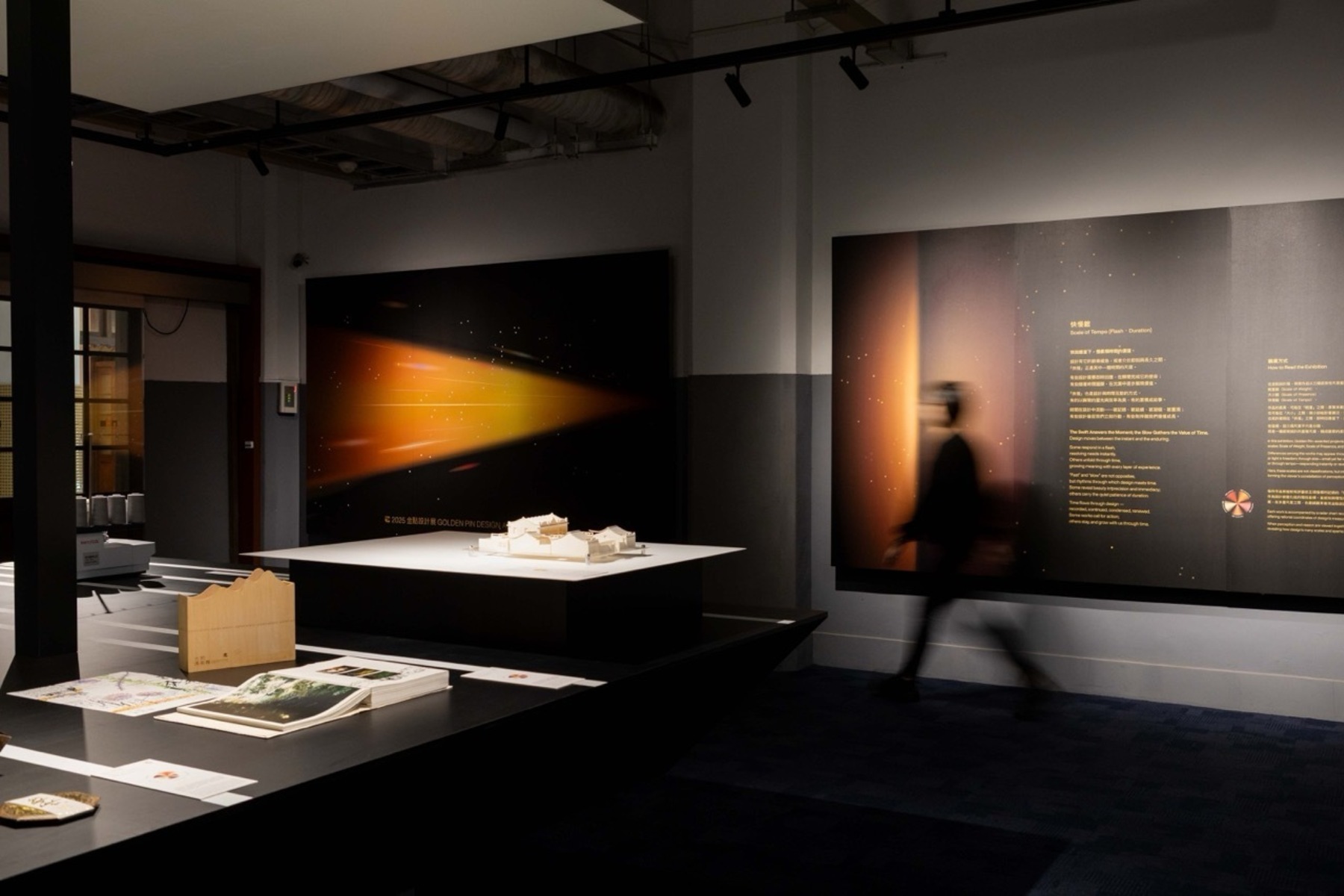
The complete list of Best Design of the Year winners is available on the official website (https://goldenpin.org.tw/goldenpin/en). This year’s award-winning works are showcased at the 2025 Golden Pin Design Award Exhibition, now on view at the Taiwan Design Museum in Taipei’s Songshan Cultural and Creative Park through April 26, 2026. The public is warmly invited to visit the exhibition and experience the outstanding creativity and innovation of both Taiwanese and international design.
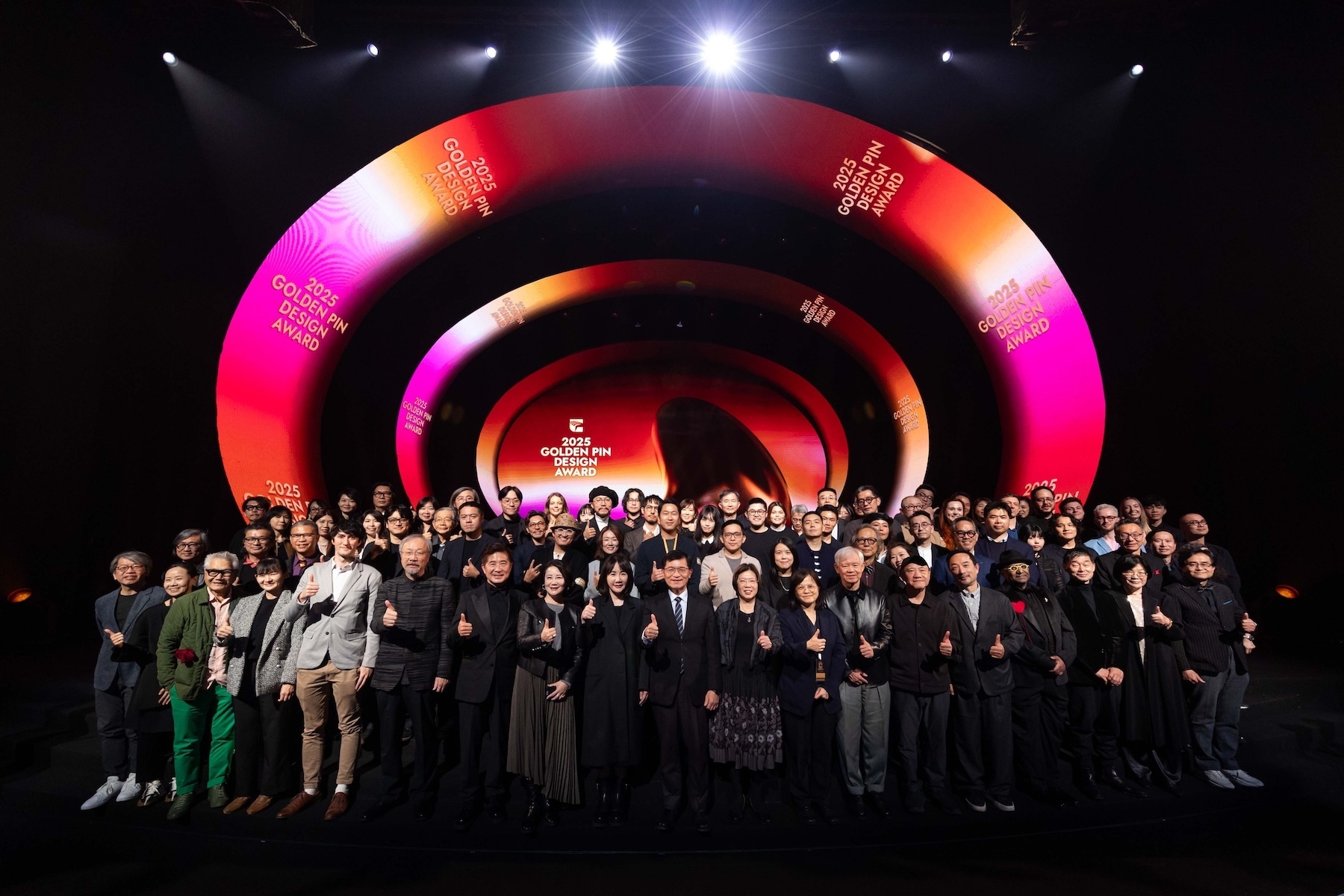
Winners of the 2025 Best Design of the Year and Special Annual Awards