2026 Golden Pin Salon in Seoul Recap: Exploring Ultra-Experience Design and Opening a New Chapter in Taiwan-Korea Design Exchange
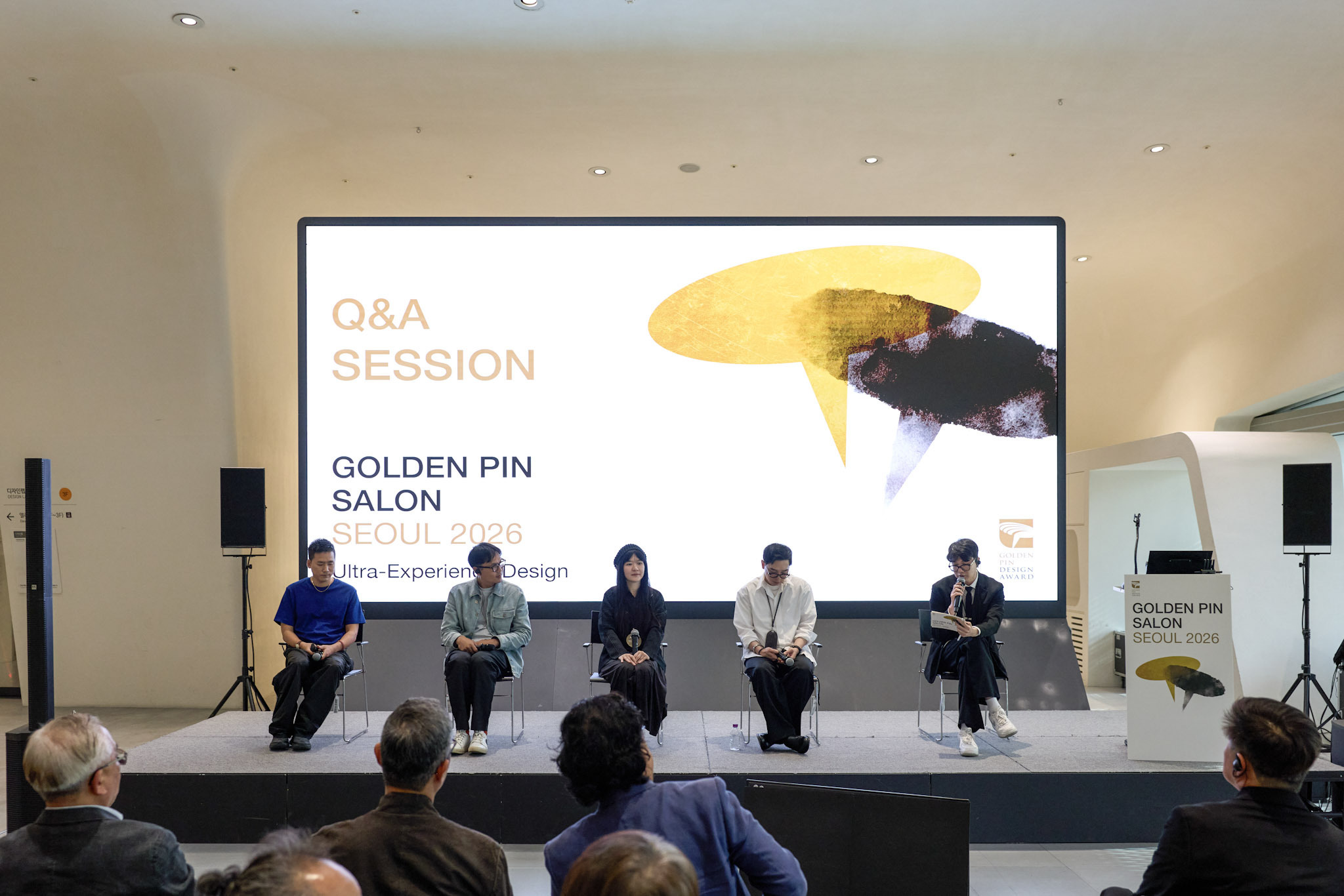
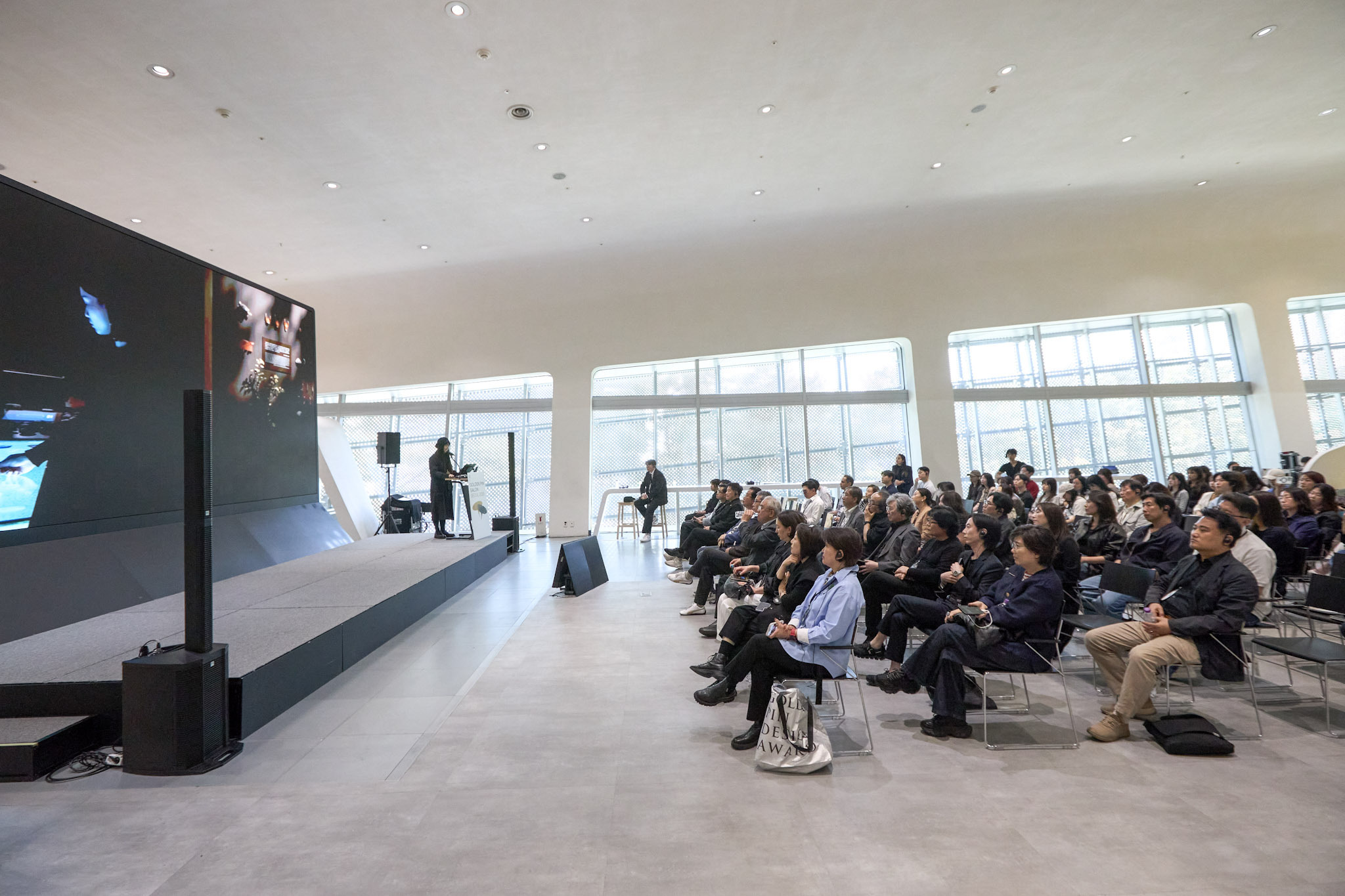
The Golden Pin Design Award’s "Design Perspectives × Golden Pin Salon" made its debut in Seoul this year on April 25. Held at the iconic Dongdaemun Design Plaza (DDP Design Hall), the event initiated a vibrant dialogue with the local design community. Organized in collaboration with Korea’s leading design media—the monthly magazine Design, the salon featured four distinguished designers from Taiwan and South Korea: Ling-Li Tseng, co-founder of Serendipity Studio; Keng-Ming Liu, Founder and Creative Director of Bito; Suk-woo Lee, renowned industrial designer and founder of SWNA; and Sung-chul Park, CEO of NiiiZ Design LAB. Together, they engaged in a profound cross-disciplinary and cross-cultural exchange, drawing an enthusiastic response from the audience.
Themed "Ultra-Experience Design," the salon focused on how design integrates technology and culture to create sensory experiences that resonate deeply with people. The four speakers shared insights from their respective fields—including product design, spatial design, cultural curation, and motion design—discussing how they redefine the interaction between humans and design within their creative contexts. Their stories provided diverse experiences and perspectives on cross-disciplinary integration and the creation of experiences in contemporary design.
Ling-Li Tseng: Everyone Possesses the Ability to Manifest Culture
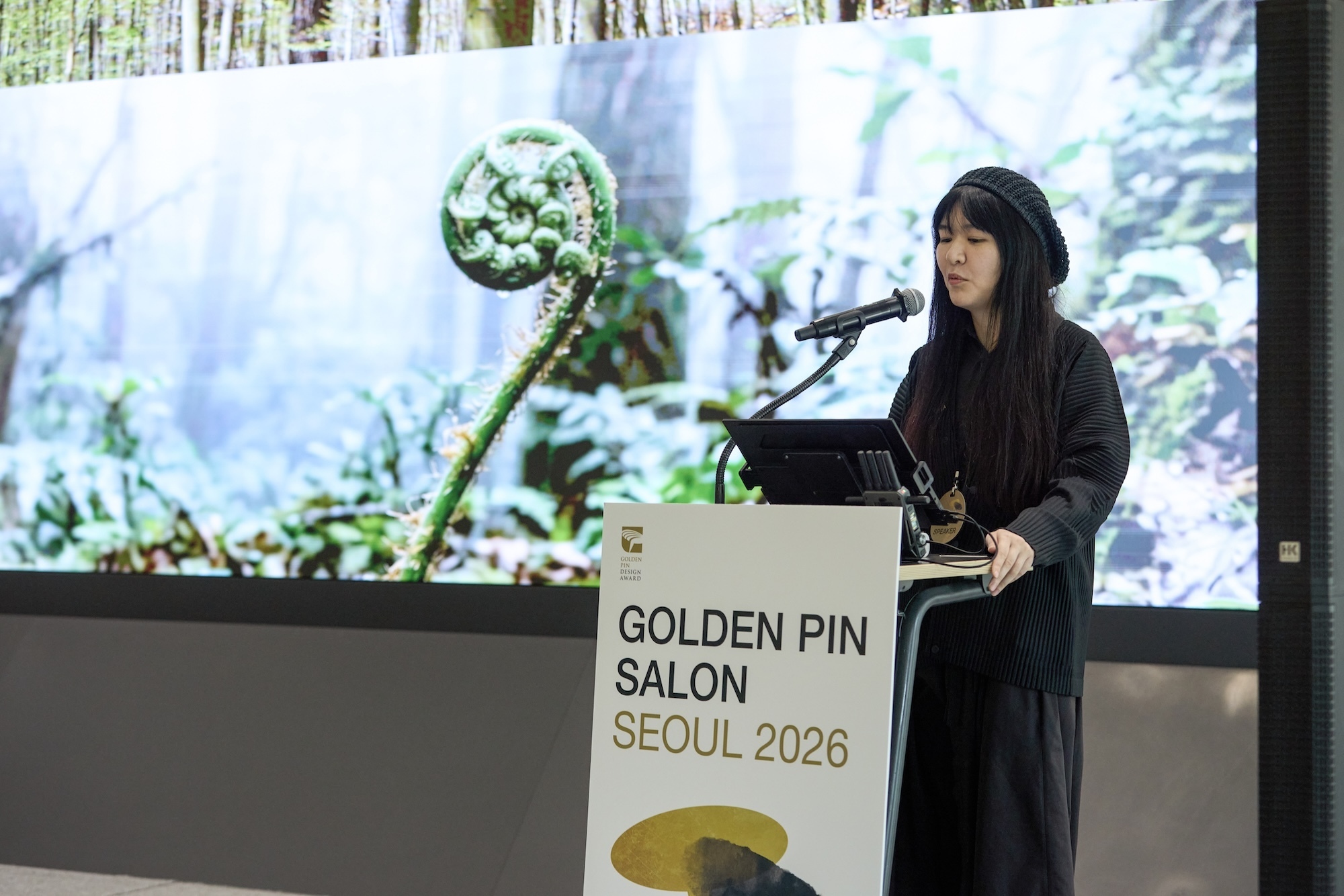
"When we discuss Taiwan abroad, whether culturally or geographically, there is often a sense of 'blurriness' that is difficult to describe precisely," Ling-Li Tseng began, sharing her personal observation as the salon's first speaker. For her, this "blurriness" is not a deficiency but a state rich with interpretive possibilities—a driving force in her creative work.
"I strive to transform those blurry feelings into experiences that everyone can perceive through the practice of space and materials." After years of studying and working in the West, including the U.S. and the U.K., she returned to Taiwan in 2018. She began to consciously seek creative inspiration on this somewhat ambiguous yet nurturing island, embarking on an exploration of "cultural materialization" through a lens that is both poetic and rational.
She reflected on the first project she undertook with the Serendipity Studio team in Taiwan: Mist Encounter. This summer pavilion for the Taipei Fine Arts Museum was conceived when the museum was about to close for HVAC maintenance. The team took mist and microclimates as their theme, erecting a temporary installation of scaffolding and mesh in the museum’s plaza. As ethereal mist rose within the rectilinear space, it not only cooled the air but acted as a silent summons, drawing people closer. It transformed a plaza that people usually hurried across in the sweltering heat into a "living room-style" public space, creating a shared, somatic experience.
In subsequent projects, the team continued to develop creative methods for engaging in dialogue with nature or the surrounding environment. Whether it was a temporary lounge area in a Kaohsiung urban renewal site or a light festival installation in a forest that blended mist with man-made geometric structures and natural forms, these works amplified spatial perception through the interweaving of materials, climate, environment, and physical experience. This thinking further extended into the practice of cultural curation.
For instance, in the Hualien Pavilion The Tales From Where The Land Emerge for the 2021 Creative Expo Taiwan, the entrance featured a massive geological stratification structure as the primary installation. All materials were sourced directly from Hualien, preserving their raw authenticity to allow visitors to feel a primal, ancient power upon entry; this was paired with graphic narratives and traditional chants to imbue the pavilion with a spiritual atmosphere. Similarly, in the 2023 Taiwan Design Expo’s When Mountains and Rivers Start, seven colossal boulders symbolizing New Taipei’s geology served as an impactful entrance installation. By merging topography, archaeology, technology, and cultural translation, the exhibition design led visitors on an adventurous journey.
In the Taiwan Pavilion Visible Shop at the 2023 London Design Biennale, Tseng explored a different creative path through man-made objects and culture. Responding to the annual theme of "Collaboration," the team used "parts" as a metaphor for Taiwan—a small island playing an indispensable role in the global supply chain. Through magnetic-driven devices and interactive mechanisms, they presented a system composed of individuals that remained inherently flexible. It vividly demonstrated the resilience of Taiwan’s small and medium-sized enterprises: while each focuses on its own technical expertise, they can rapidly assemble into a team for collective action. This experimental cultural translation transformed previously unspeakable qualities into tangible experiences, eventually winning the "Best Design Medal" and allowing Taiwan to be seen by the world in a distinct and vivid light.
Reflecting on years of creation and exchange, Tseng believes that culture—which cannot always be clearly described—gradually becomes understood and perceived through continuous accumulation and sharing. "I believe everyone possesses the ability to manifest culture," she said. She holds that even if culture itself is fluid and filled with uncertainty, as long as one responds sincerely to their observations and feelings in every moment—continually expressing, communicating, and interpreting—"even if clarity exists only for a fleeting instant, it will still leave a minute yet authentic mark on history."
Park Sung-chul: Seeking "Koreanness" Through Spatial Experimentation
"How do we position ourselves in this era?" Sung-chul Park, CEO of NiiiZ Design LAB, opened his presentation by highlighting the global recognition of Korean cinema at the Oscars and the immense influence of BTS. He noted that as Korean film, music, and fashion rise on the world stage, Korean culture is receiving unprecedented attention. However, in the field of Korean spatial design—which has a shorter history of modern development compared to Europe and the U.S.—how to establish a unique position within an international context has become a subject of his continuous reflection.
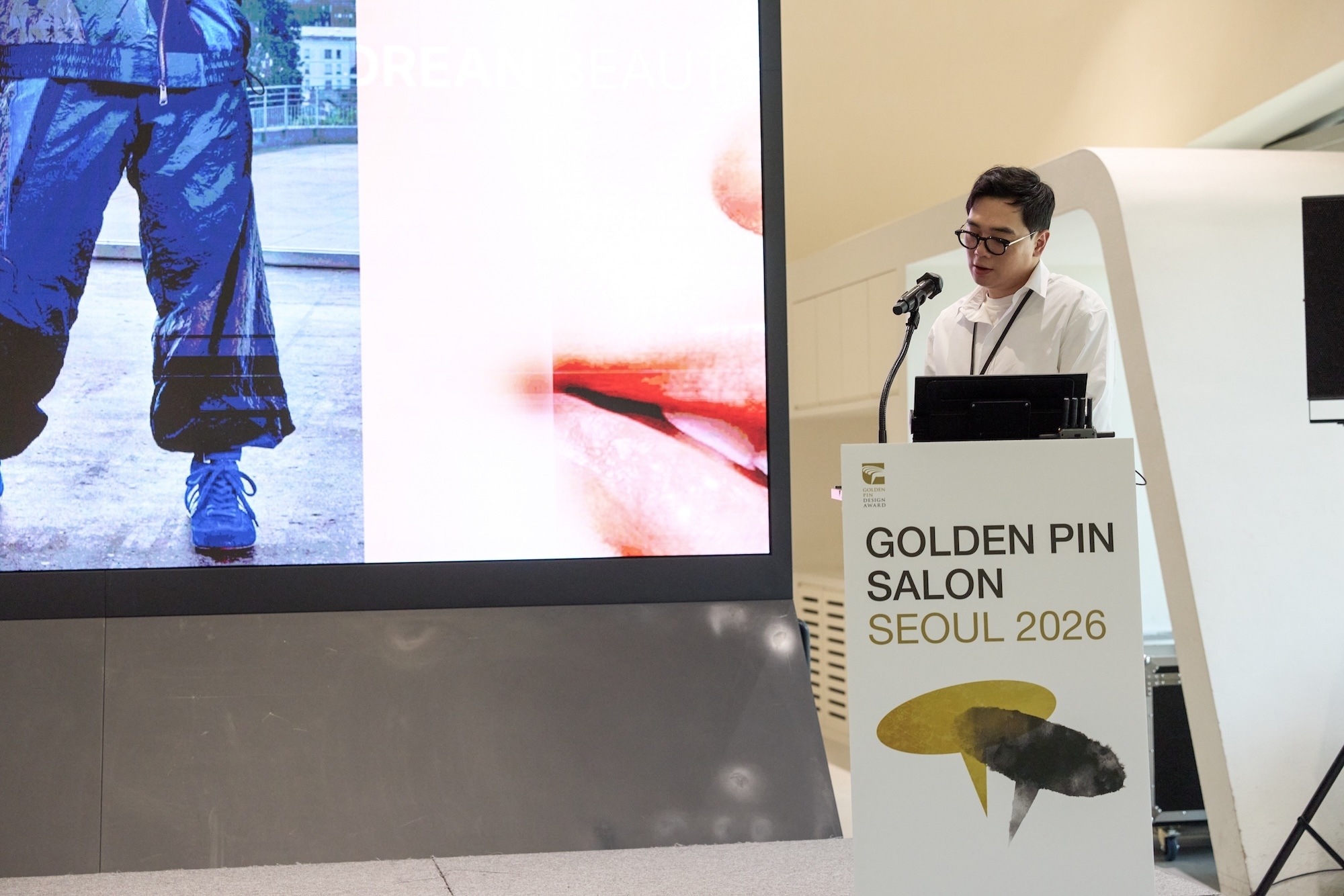
This reflection stems from a re-observation of the everyday. He mentioned a photo of a Korean streetscape that recently went viral on social media; an image of an urban scene all too familiar to locals unexpectedly drew international fascination. This led him to realize that environmental conditions previously dismissed as cluttered, aged, or suboptimal might actually be one of the key elements defining the character of Korean design. Whether it is the urban grain where skyscrapers and traditional buildings coexist, the topographic relationship between mountains and architecture, or the dynamic imagery on media facades, these seemingly contradictory presences together shape the unique spatial vocabulary of contemporary Korea.
Based on these observations, he summarized three characteristics of contemporary Korean spatial design: the "ability to reinterpret" existing resources, a highly mixed "diversity," and the "preservation and heritage" that seeks to sustain cultural context within realistic constraints. In his view, Korean design is not built upon a single style but emerges from the layering of different eras and conditions—ranging from traditional Hanoks and concrete buildings of the 1960s–80s to the intervention of contemporary digital media. All these elements constitute part of "Koreanness."
This design perspective is concretely reflected in his firm's projects. In the Pan Am flagship store in Seongsu-dong, the team chose to preserve the original structure and operational traces of the tape factory, allowing visitors to feel the accumulation of time and the continuity of the space’s unique history. For SM Entertainment’s "Kwangya@Seoul," they created an experience where virtual and physical realities intersect. Despite limited physical space, the use of media allows for dynamic and variable content, responding to the rapid iterations of K-pop culture and turning the space itself into a vehicle for cultural expression. In a Lotte Department Store Main Store project, they designed an experimental and flexible space for a new brand, utilizing media installations and dynamic signage systems to enhance the brand experience, forming a new symbiotic relationship between physical space and digital content.
From the contemporary translation of traditional Hanoks to commercial spaces integrated with digital media, Park Sung-chul continues to manifest his understanding of "Koreanness" through experimentation. He pointed out that contemporary Korean design does not attempt to eliminate differences but seeks a balance within them, making incompleteness, conflict, and diversity part of the creation. For him, "Koreanness" is not a fixed form but a multi-faceted and layered existence continuously shaped by the intersection of time and circumstances—and this is perhaps the most captivating aspect of contemporary Korean spatial design.
Keng-Ming Liu: From Motion to Immersive Experience—Creating "Light" That Makes People Linger
"Humans are like insects; we are drawn to light and gather toward its glow," began Keng-Ming Liu, Founder and Creative Director of Bito, sharing a personal anecdote. An entomology major in university, he once used light to attract insects in the mountains; years later in New York's Times Square, he saw crowds looking up at a video installation he had helped produce. At that moment, he realized that the mutual attraction between people and imagery mirrors an insect’s phototactic instinct. Design, in a sense, is about creating that "light" that captivates and makes people linger.
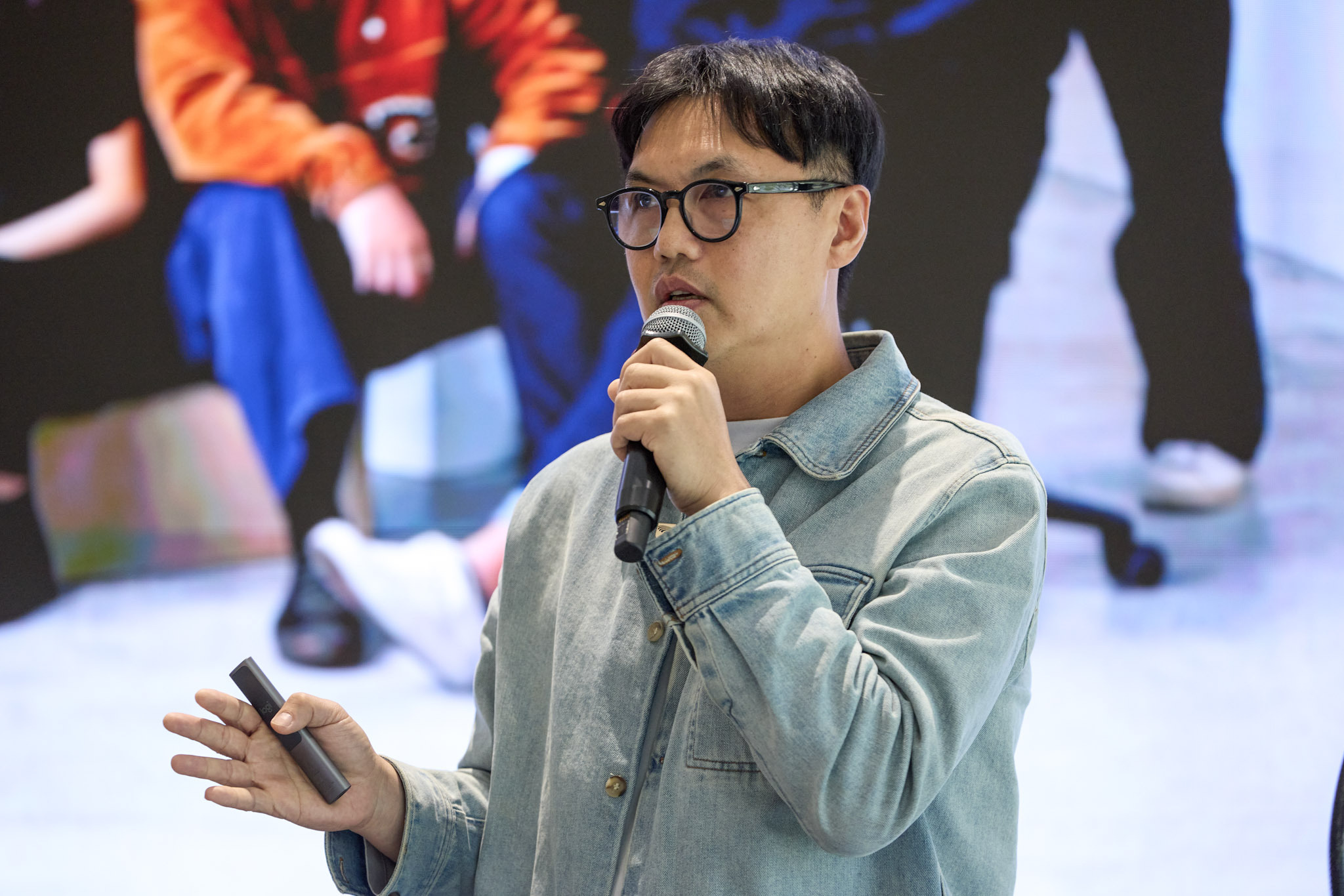
This observation became the starting point for his reinterpretation of design. To Liu, "motion design" has never been just about technology but a way of storytelling. Therefore, he and his team focus not merely on the form of the visuals but on how narration triggers emotional resonance. From his early days in New York producing content for television networks and large-scale venues to returning to Taiwan to found Bito, they have sought to place motion design at the core, further extending into the concepts and methods of "motion branding."
Liu first shared the recently acclaimed rebrand of Taiwan’s tourism identity, "TAIWAN – Waves of Wonder." Moving away from traditional sharp, straight design languages, they drew inspiration from the contours of Taiwan’s mountains and the undulation of its oceans to propose a dynamic identity centered on "curves." "Taiwan is a place full of 'curves.' This flowing line encompasses the island’s winding topography, as well as the indescribable emotional surge when drinking bubble tea." Today, this identity system shines in Times Square, the London Underground, and on the streets of Seoul, confidently conveying Taiwan’s image to the world like a tourism ambassador.
In his role as art director for the Golden Horse Awards—the pinnacle of Chinese-language cinema—Liu has led his team through continuous breakthroughs. From the "refocusing" of relationships between people and cinema during the pandemic for Golden Horse 58, to the sculptural visual ingenuity that broke the constraints of traditional graphic design for Golden Horse 59. For Golden Horse 60, in the face of the AI wave, he and his team took the opposite path, inviting creators from various fields to return to the most primitive creative methods—completing thousands of frames of hand-drawn animation. This choice was like a manifesto, but he emphasized it was not an "opposition" to AI; rather, it was a response to the AI era, highlighting that cinema is inherently a collaborative process. To him, these frames are precious in an age where AI can generate images in a second, carrying an irreplaceable emotional depth because he believes that "only authentic content can truly move people's hearts."
Over the years, he and his team have expanded their creative horizons, shifting from one-way narration to allowing the audience to participate and experience stories. He calls this state "Story Living"—where the audience doesn't just listen to or watch a story, but walks into it. For example, as the long-time director of the Golden Pin Design Award ceremonies, he and his team have introduced many innovations, ensuring that visuals are no longer just a backdrop but can change how people perceive space. Through interaction with the stage, installations, and the audience, these works evoke emotional resonance. In the content and interactive design for "Tech World" at the Osaka Expo, the team further integrated Taiwan's technology and design to present a narrative of Taiwan’s resilience, allowing the audience to forge emotional connections through a sensory-shaking experience, thereby gaining a deeper understanding of the content.
From the boy studying insects in the mountains to the director defining Taiwan's image on the international stage, Liu believes he has always maintained the passion to "dare to try and dare to be moved." For him, no matter how technology develops or mediums change, the ultimate goal of design remains the same: to create that captivating “light” that moves people's hearts and makes them linger.
Lee Suk-woo: Dialectics of Design Essence in Conflict and Contrast
"In Korea, when people are torn between Jajangmyeon (black bean noodles) and Gamja-jeon (potato pancakes), the answer is often: 'Let’s just have both!'" Lee Suk-woo, founder of the renowned design studio SWNA, opened with a humorous everyday dining example to explain his understanding of Korean design. He believes that juxtaposing conflicts and finding balance through innovation is the very hallmark of Korean design.
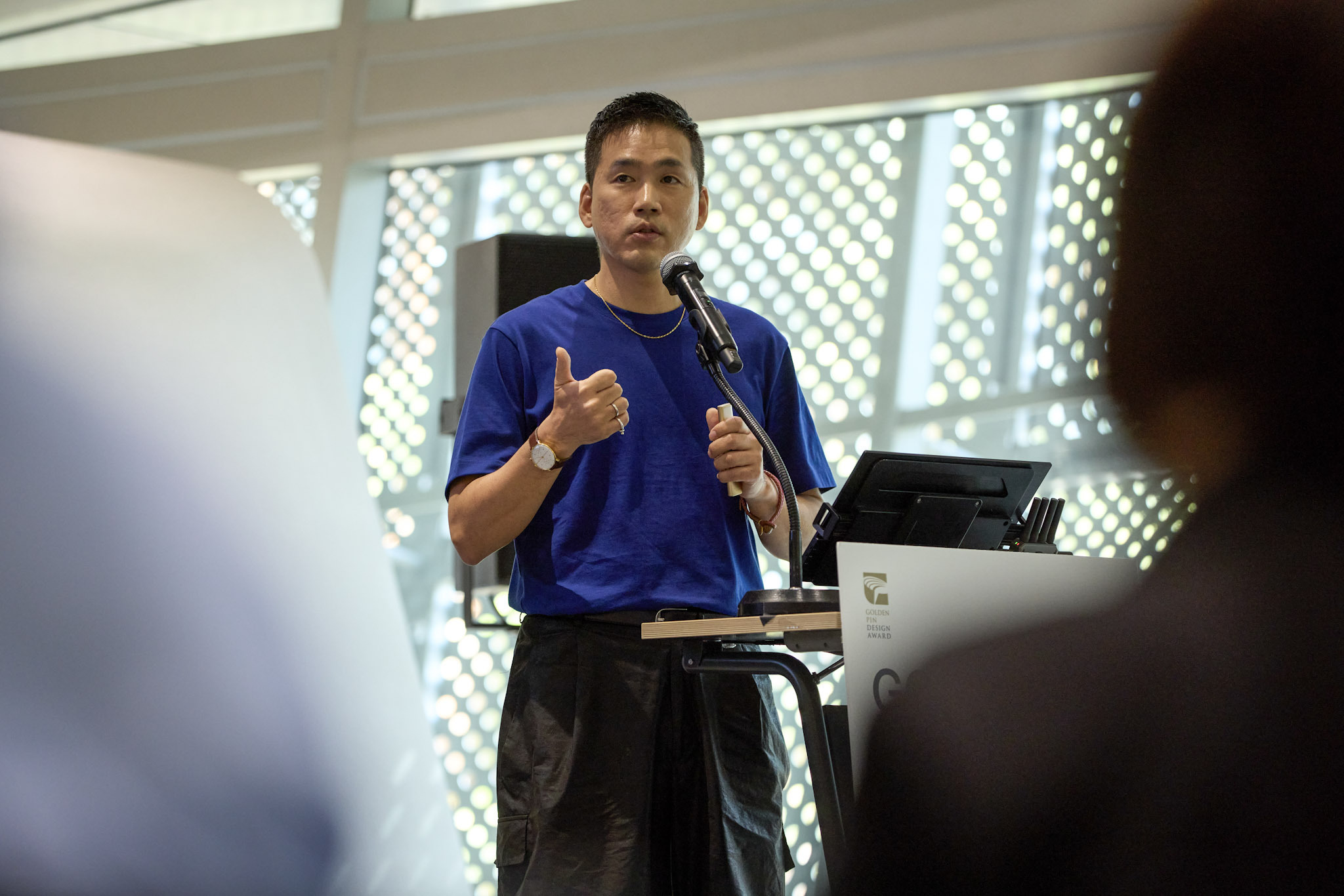
His observations of daily life are both subtle and unique, which he illustrated through several practical cases. He mentioned the common dining table found in Korean restaurants that integrates utensil storage—a hybrid design pursuing both efficiency and convenience. In Namdaemun Market, vendors often pre-arrange side dishes on trays and stack them high to serve quickly when business begins. Even if the method appears unrefined or even chaotic, it contains an extremely practical and efficient logic.
This "coexistence of contradictions" is also manifested in his design practice. He once reinterpreted the traditional Korean small round table (Soban). Drawing inspiration from the phonetic similarity between the Korean words for "small table" and "puppy," he ingeniously transformed the legs into four paws. This not only vividly captured a sense of movement but also practiced his favorite vocabulary of "contrast" between a stable tabletop and deformed structural legs. He also drew inspiration from the humidity-regulating functions of traditional ceramics used for fermented foods, using 3D printing and ceramic craftsmanship to create a series of modern ceramic storage vessels, fostering a dialogue between traditional materials and modern technology.
Beyond the exploration of form and material, he continuously faces another layer of contradiction in design: the tension between commercial services and artistic freedom. On one hand, he runs SWNA, providing design services to meet market demands; on the other, he realizes the designs they truly want to create through his own brand, "Liberal Office." Although the latter is rarely profitable, he insists on maintaining a creative space for his team that is free from market constraints. "While the two are different in nature and present certain contradictions, they also inspire each other." He firmly believes that only through the mutual dialectic of commercial needs and creative desire can designers maintain a rare sense of freshness in repetitive work and spark the purest originality.
In a rapidly changing contemporary environment, he also constantly rethinks the way design works. Compared to linear processes of the past, there is now a greater emphasis on rapid iteration and flexibility. Against the backdrop of advancing technology and the ubiquity of AI tools, he noted, "I believe the most important thing is still to start from within and find your own voice. As long as you master this, you have the chance to achieve truly pure innovation." He also encourages designers to return to the primitive "handmade" process—using sketching, modeling, and even material experimentation to transform the most original, imaginative thoughts into concrete forms. "This process from perception to transformation is a capability we must continuously practice and cultivate."
"I grew up in the turbulent 1970s and experienced the industrial boom of the 1990s; perhaps the ups and downs of life itself have caused my design language to always seek tension within conflict." For Lee Suk-woo, this personal trajectory is a microcosm of contemporary Korean design. Navigating between simplicity and complexity, tradition and technology, and the 2D and 3D realms, this passion for embracing contradiction and seeking innovation within opposition is perhaps the important DNA that constitutes contemporary Korean design.
Seoul Salon Concludes with Success, Design Dialogue Continues
In this salon, the keen translation of sensory experiences by Ling-Li Tseng, Sung-chul Park’s profound reflections on the essence of Korean spatial design, Keng-Ming Liu’s immersive motion narratives spanning multiple media, and Suk-woo Lee’s bold perspectives on sparking innovation through contradiction—these four designers, through their respective creative paths, brought an inspiring collision of ideas to the audience. This grand event at the Dongdaemun Design Plaza (DDP) concluded on a high note, marked by vibrant exchanges between the speakers and the attendees.
The Golden Pin Design Award looks forward to this Seoul salon serving as a bridge for the design communities of both regions, providing participants with an opportunity to re-examine the core essence of design. In an ever-changing era, these reflections and practices concerning culture, emotion, and technology will become vital energy driving continued design innovation.
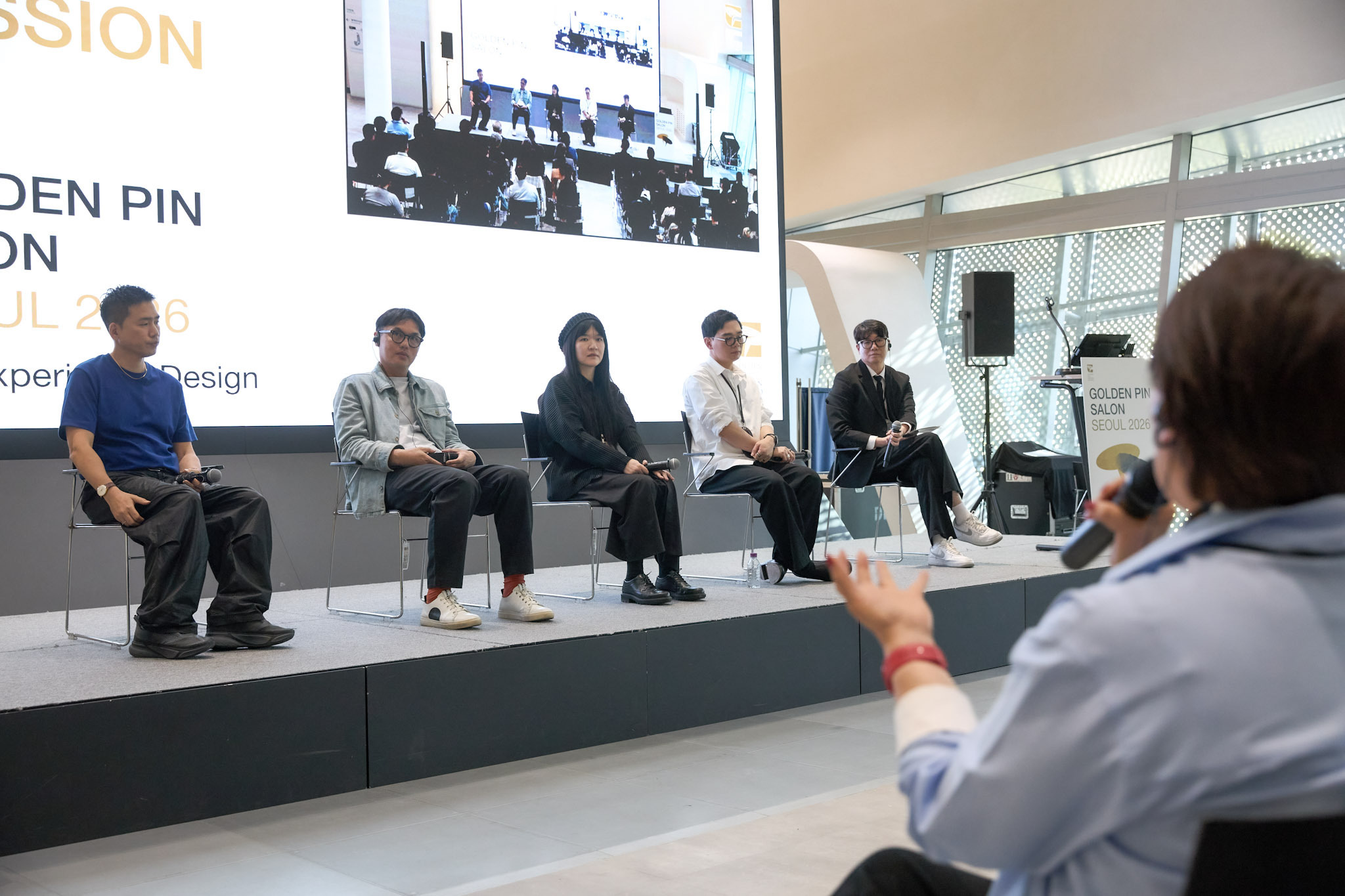
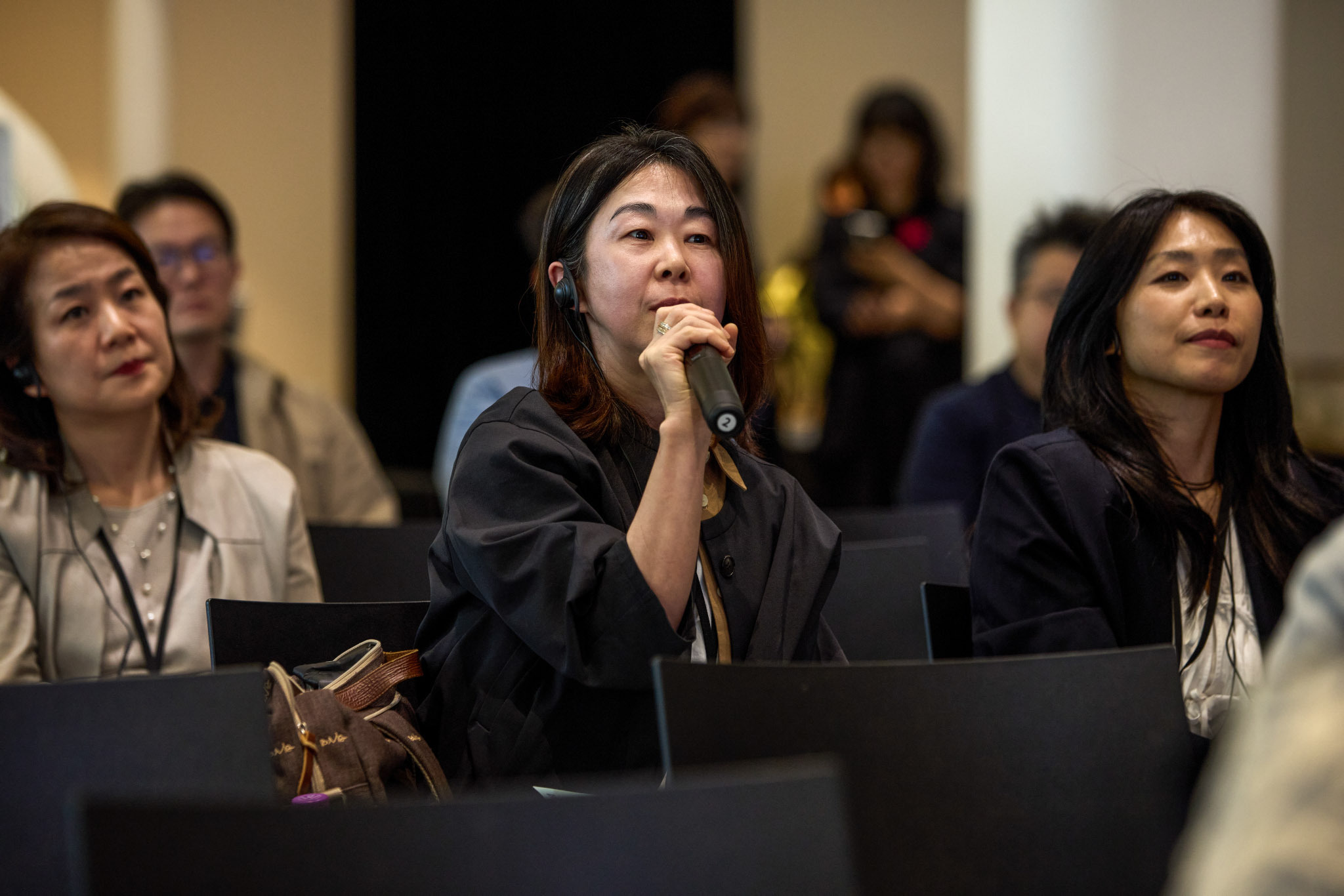
The full recorded live stream of the event is also available for playback on the official Golden Pin Design Award YouTube channel:
Call for Entries: 2026 Golden Pin Design Award
Entries are now open for the 2026 Golden Pin Design Award as well as the Golden Pin Concept Design Award. Open to designers, brands, and interdisciplinary teams worldwide, the awards span four main categories: Product Design, Communication Design, Spatial Design, and Integration Design.
Winners will gain access to Golden Pin’s diverse international exposure opportunities, industry connections, new market opportunities, and possibly more. The final deadline is June 15, 2026 (17:00, GMT+8) this year. Applicants who complete payment by May 13, 2026, at 17:00 (GMT+8) will qualify for the early bird discount and may continue refining their submission materials until the final deadline. For full details and registration, visit: https://goldenpin.org.tw/goldenpin/en