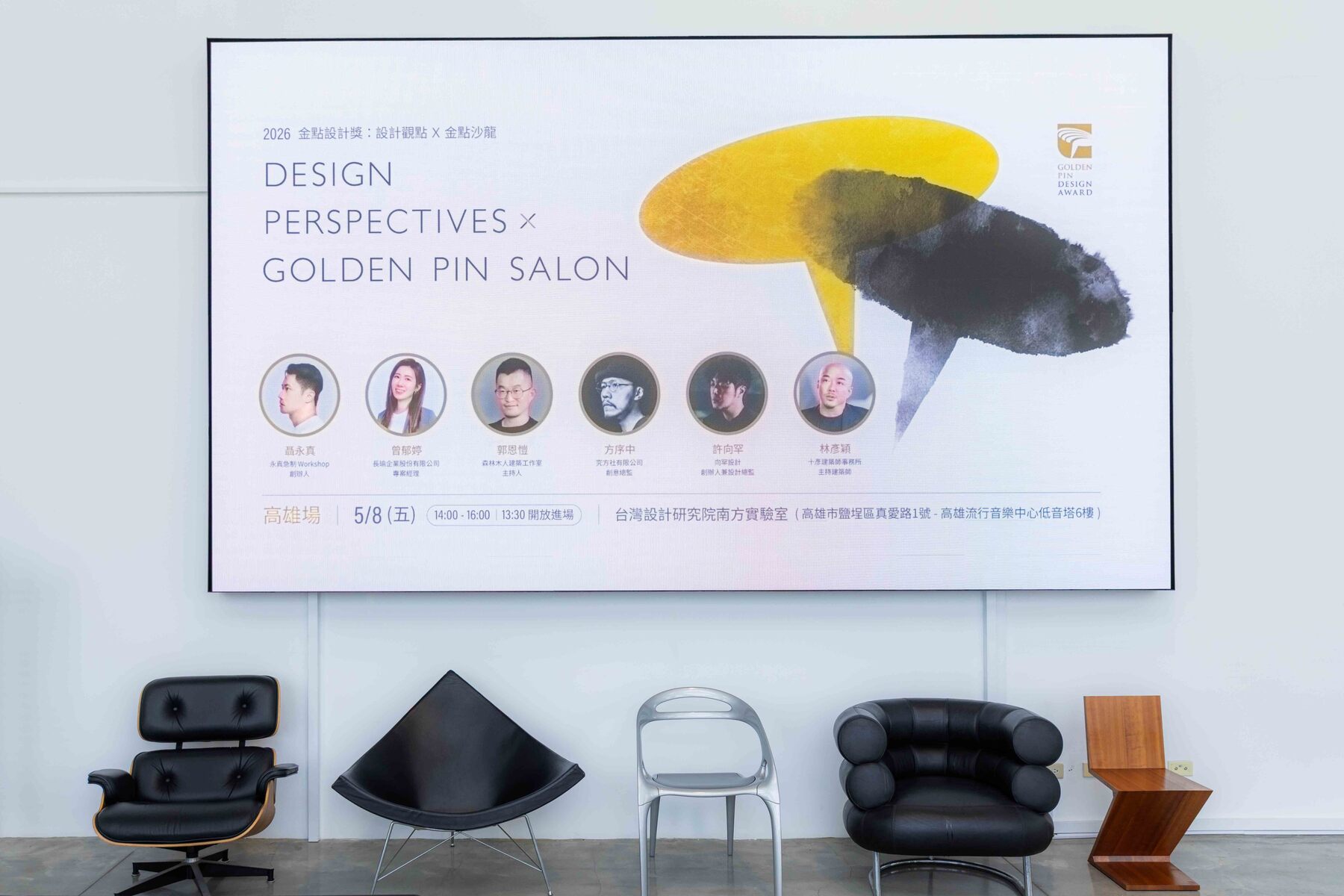
Designing for Recognition: Whose Standards Matter? 2026 Golden Pin Design Salon Bangkok Concludes with a Vibrant Exchange of Perspectives between Top Taiwanese and Thai Designers
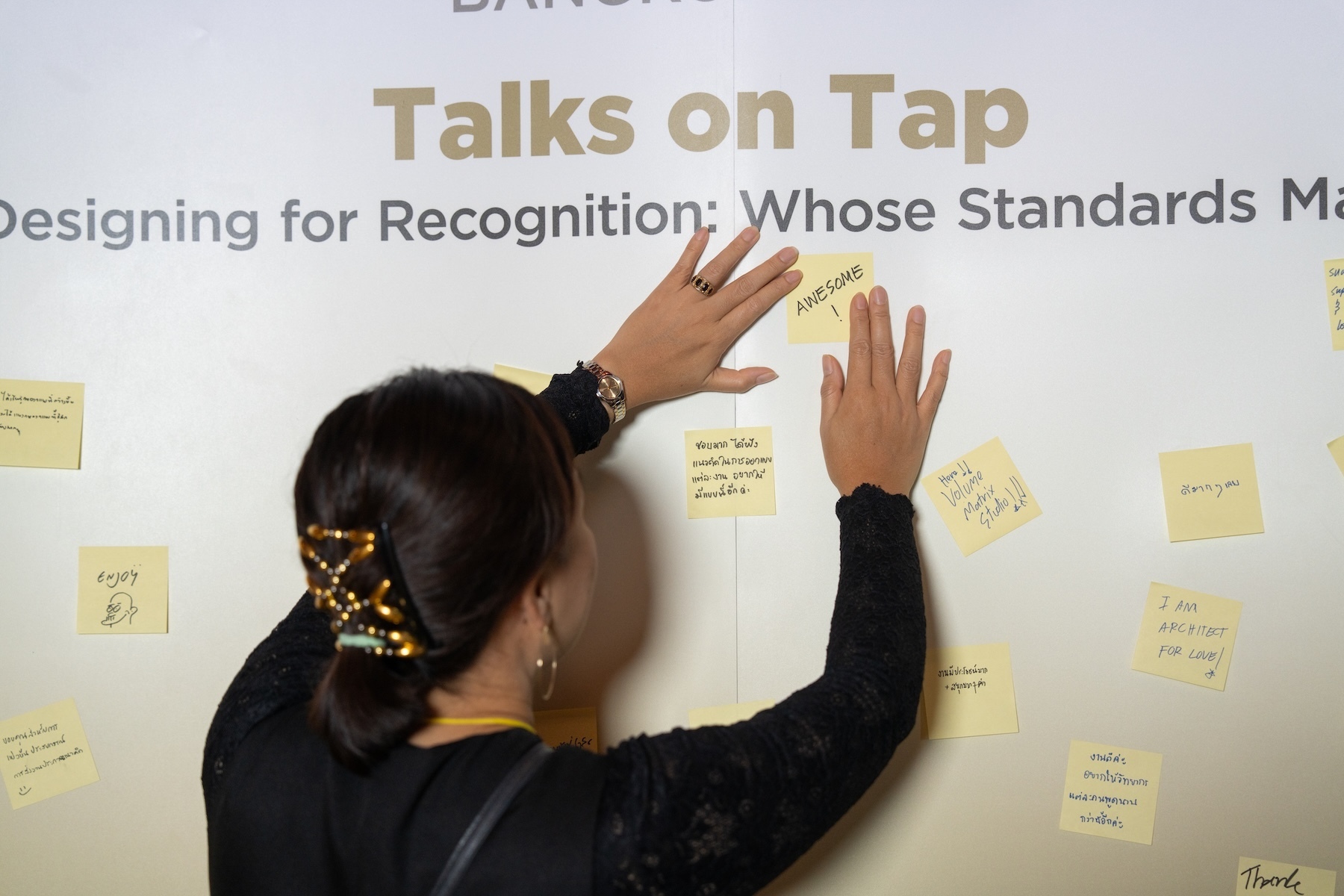
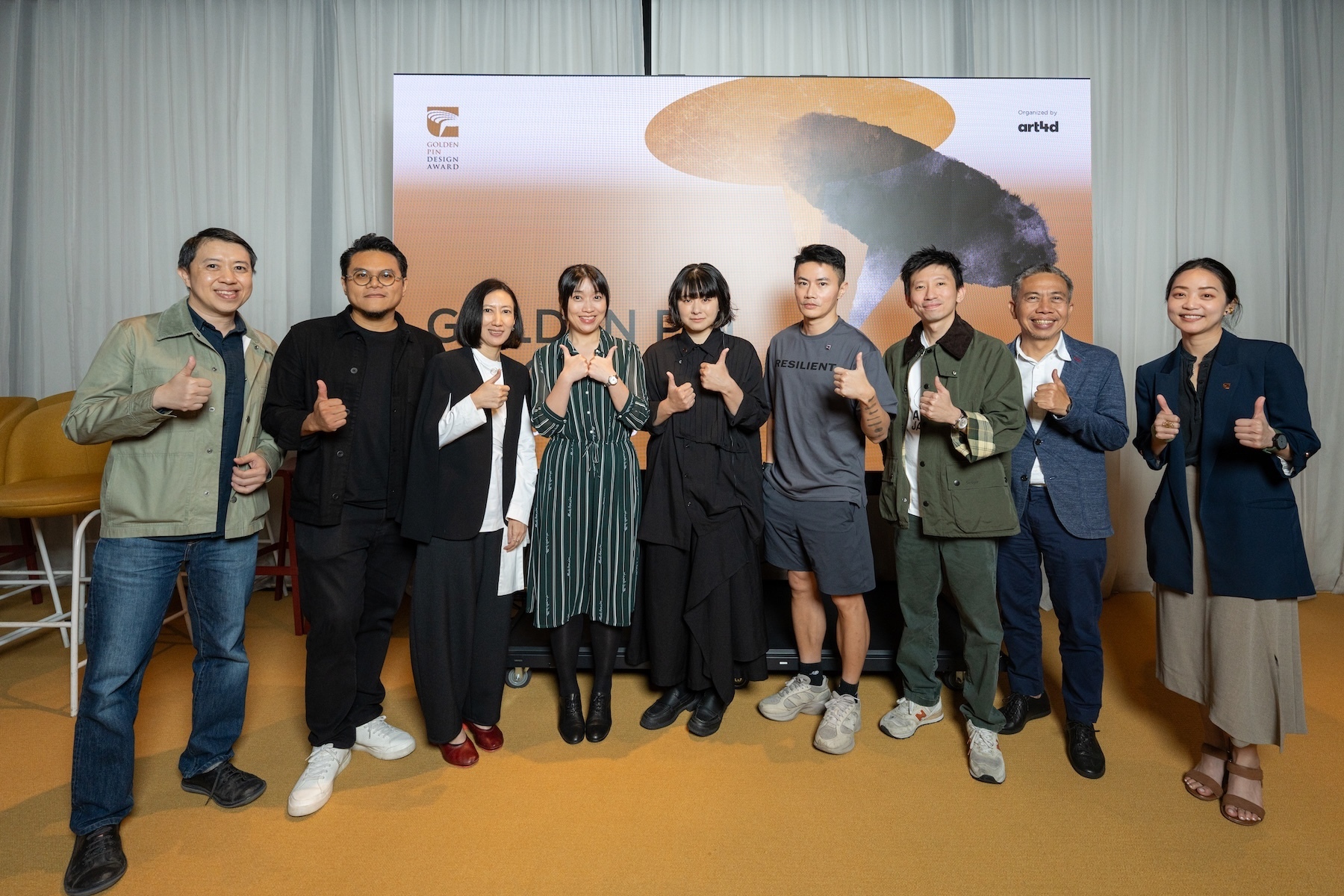
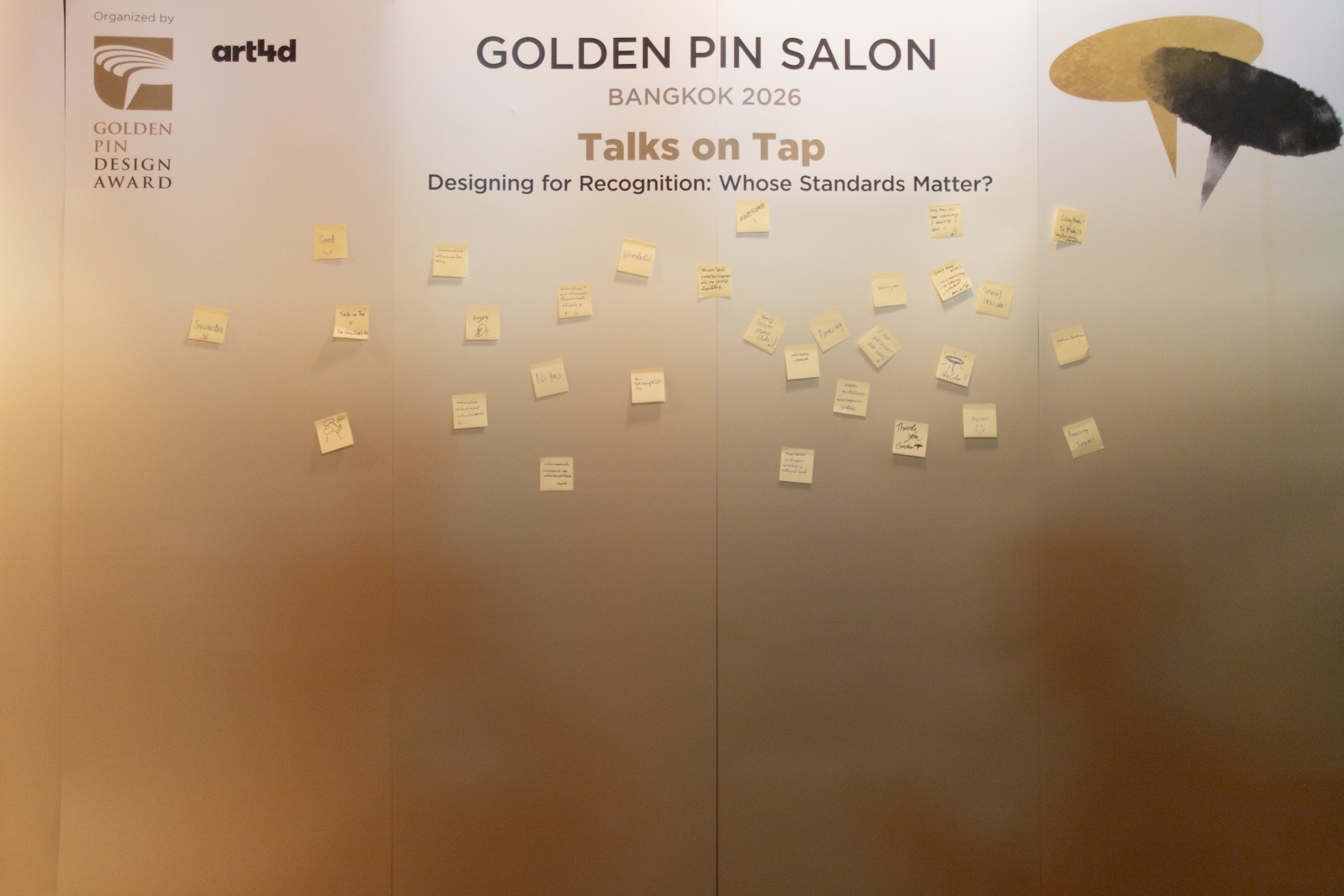
On the evening of May 6, 2026, the Golden Pin Design Award’s "Design Perspectives × Golden Pin Salon" made its grand return to Bangkok—Asia’s vibrant hub of creativity—for the fourth time, hosted at the iconic landmark, The Standard, Bangkok Mahanakhon.
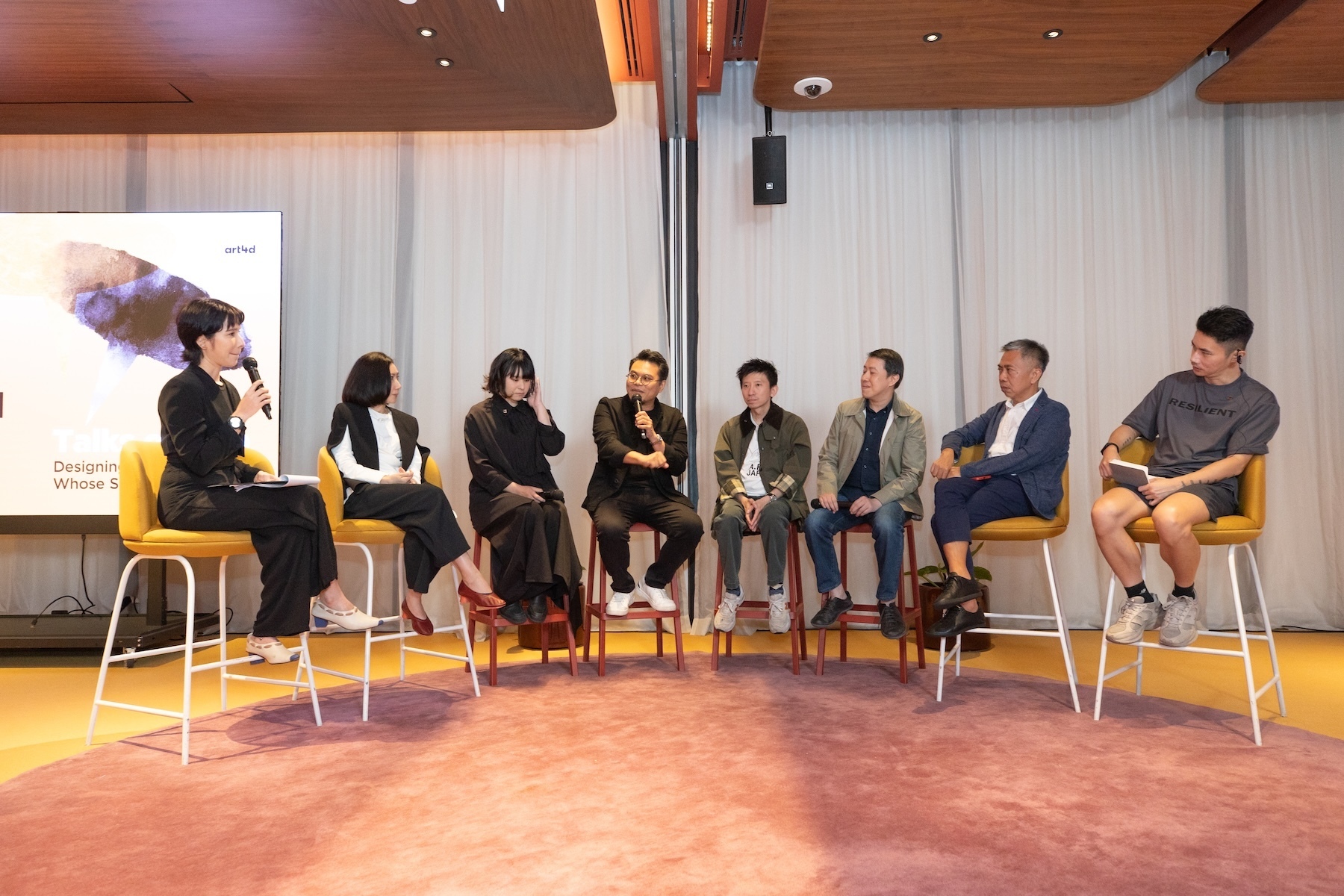
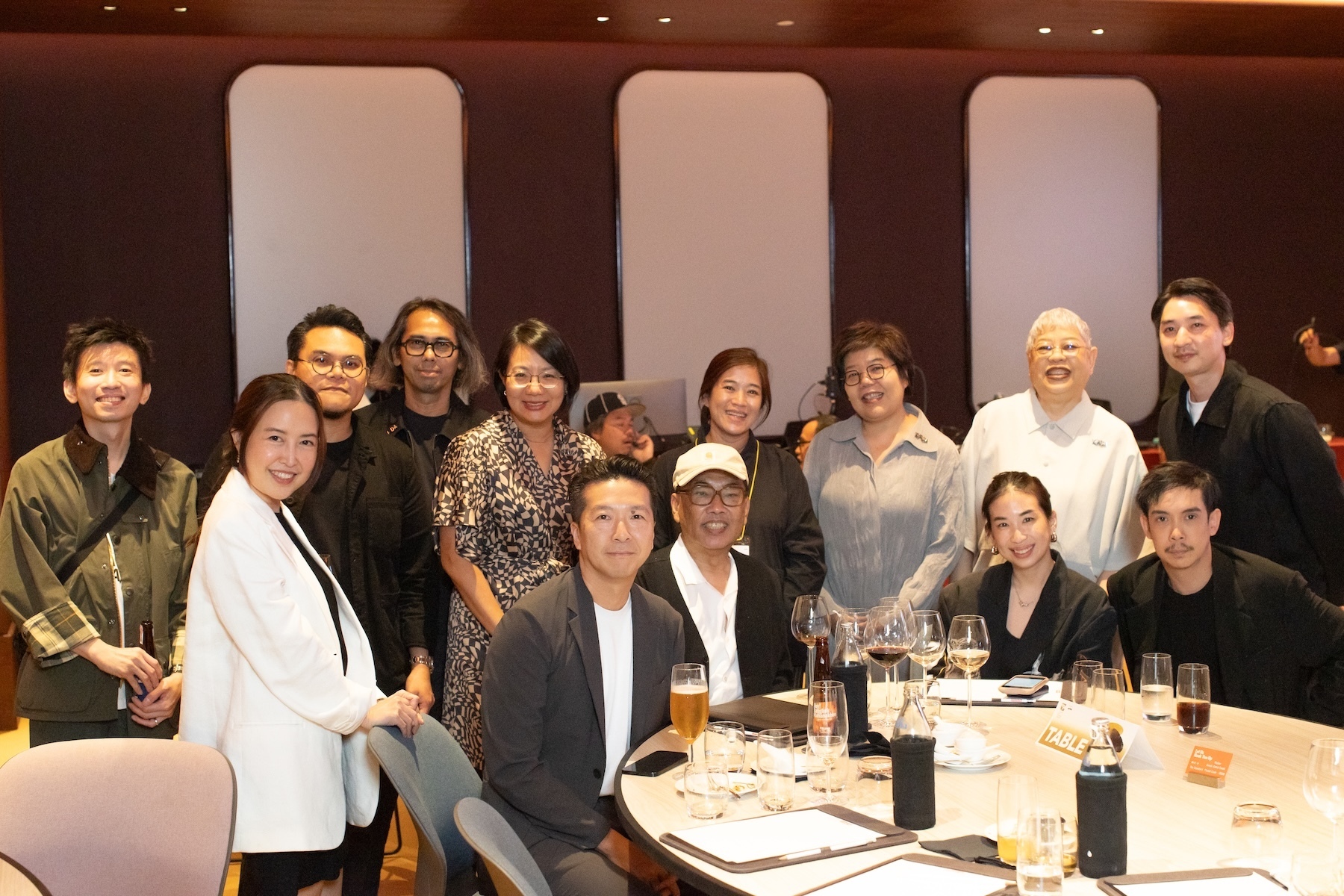
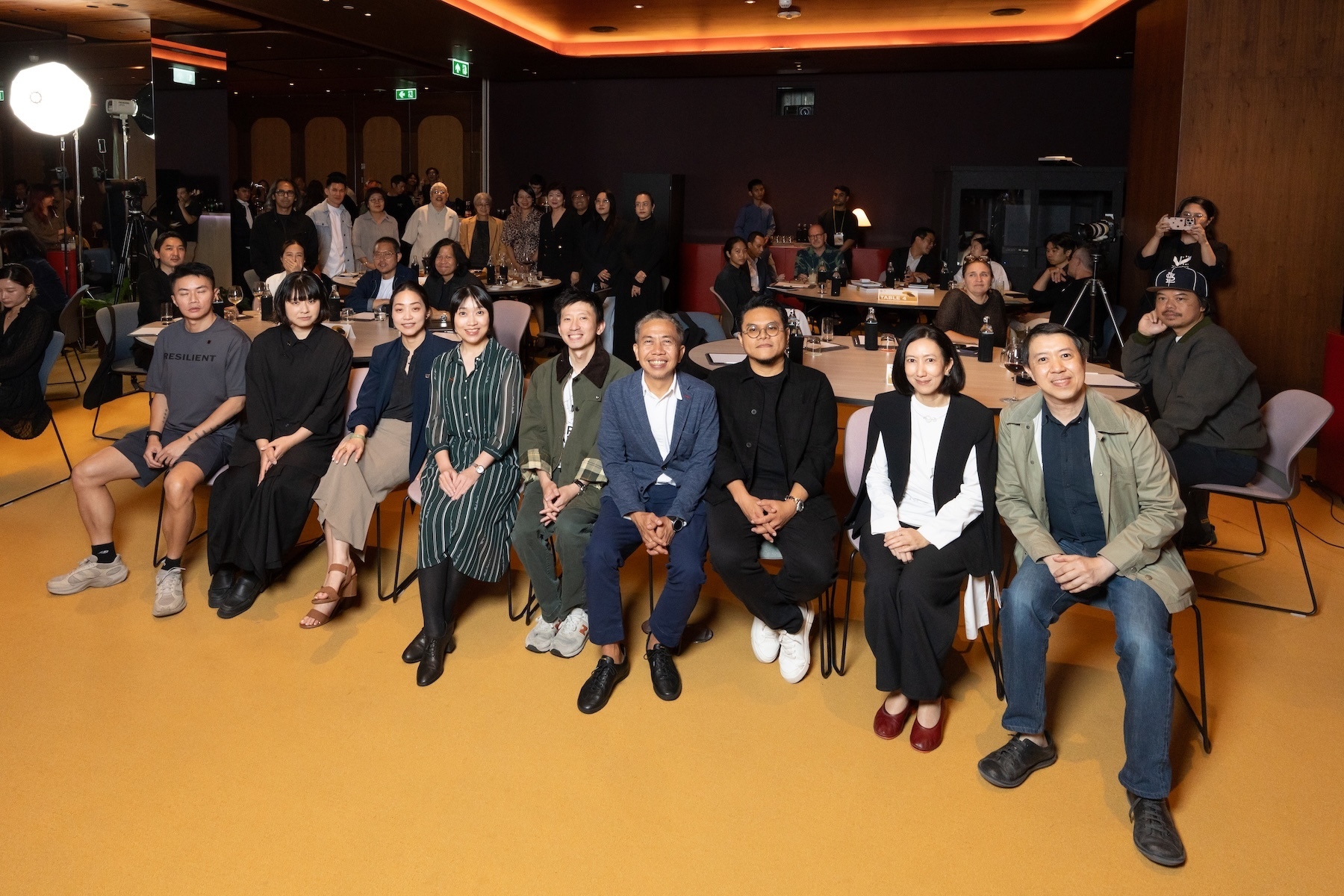
Collaborating once again with Thailand’s leading design media art4d, the event broke away from the traditional lecture format. Instead, it centered around the core provocative theme, "Designing for Recognition: Whose Standards Matter?"—directly addressing the most candid questions held by designers. The salon drew over a hundred of Thailand’s design elites together, sparking an intellectual cross-pollination across the fields of visual, product, spatial, and architectural design.
Since expanding its call for entries globally in 2014, the Golden Pin Design Award has evolved into one of the most influential international design competitions in Asia, continually fostering deep dialogues with local creative communities through its salon series. This year, the Bangkok salon elevated the discourse, seeking to re-examine the role that design accolades play today—demonstrating that awards are not merely mechanisms for recognizing exceptional designs, but pivotal forces that shape design discourse and establish value benchmarks.
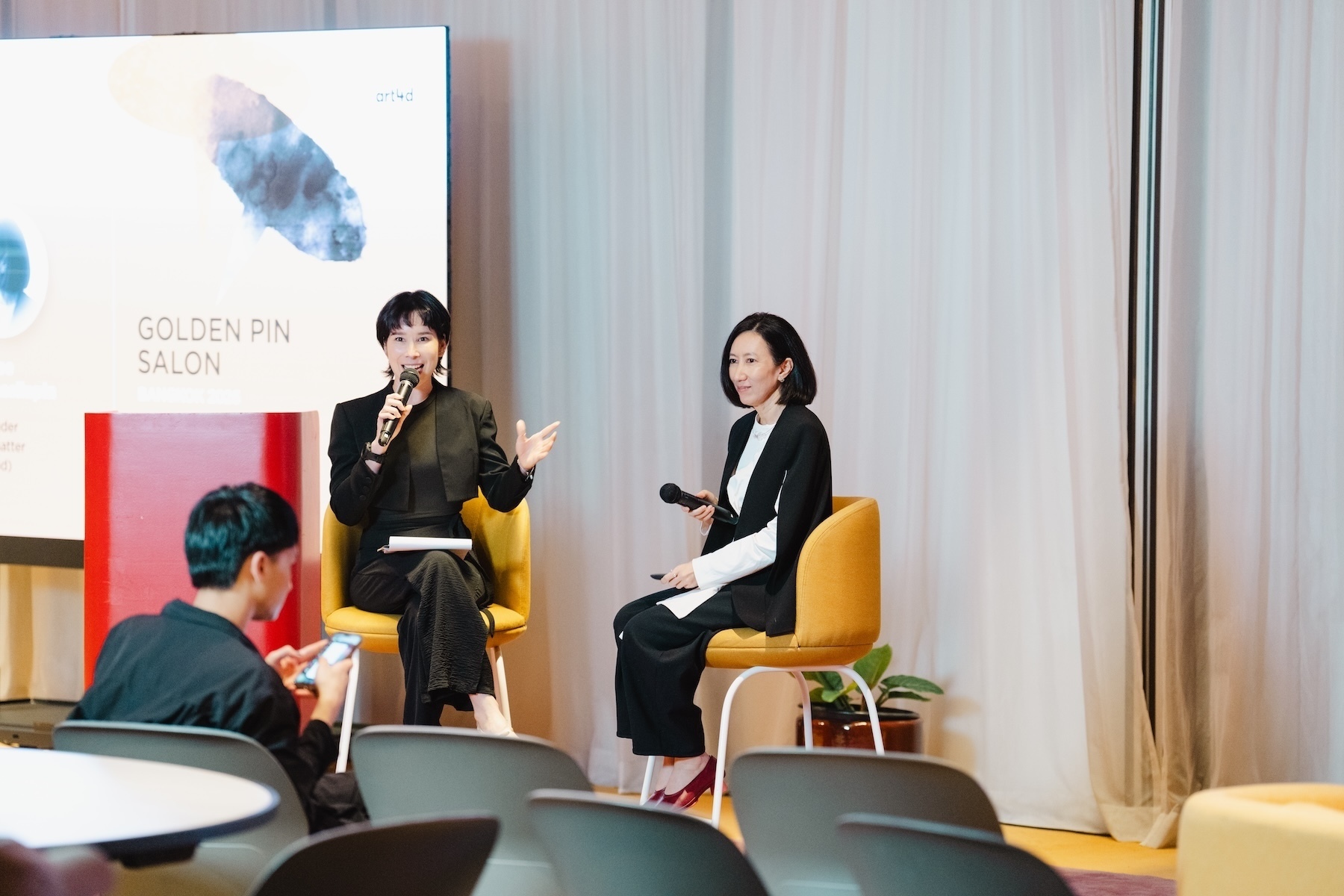
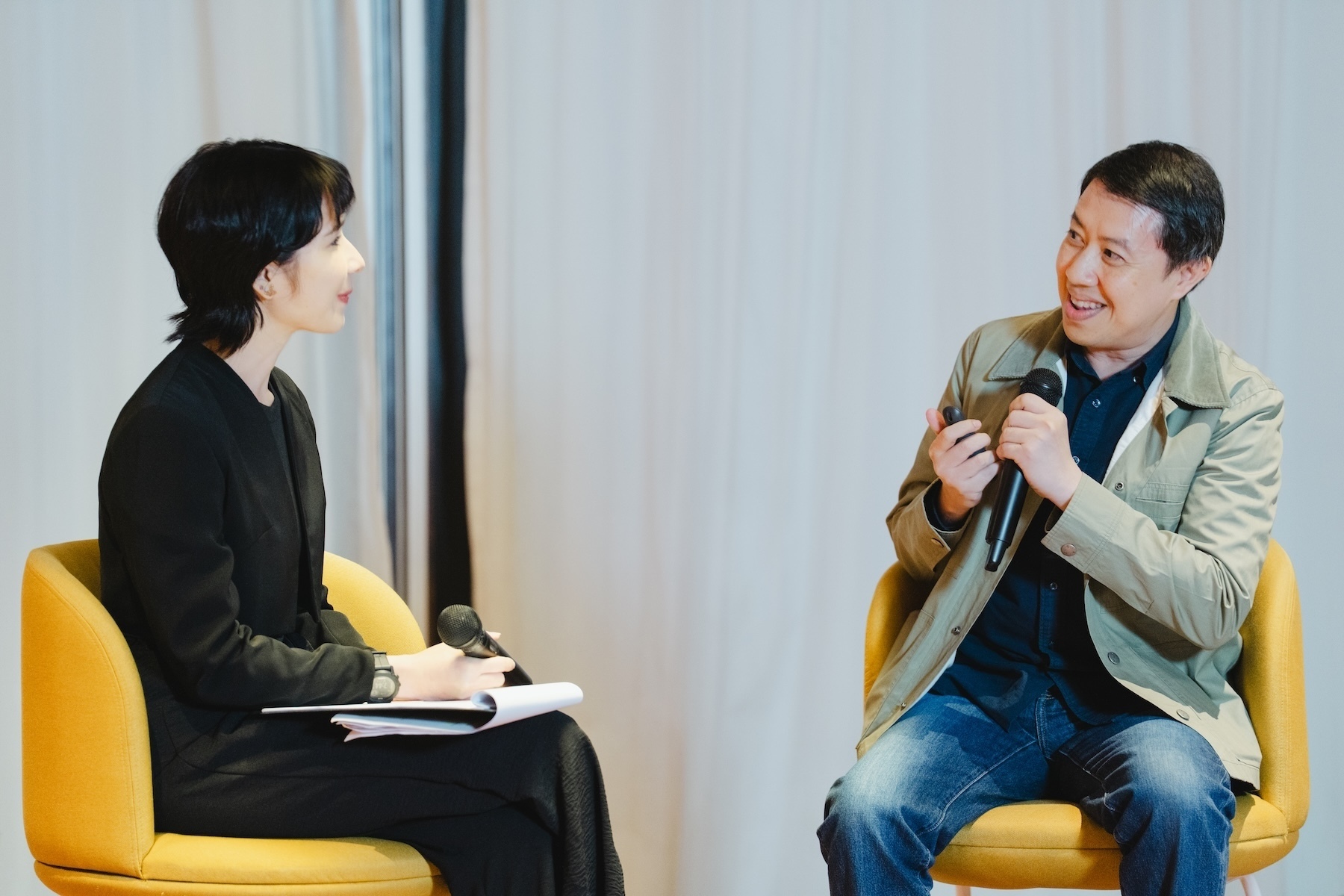
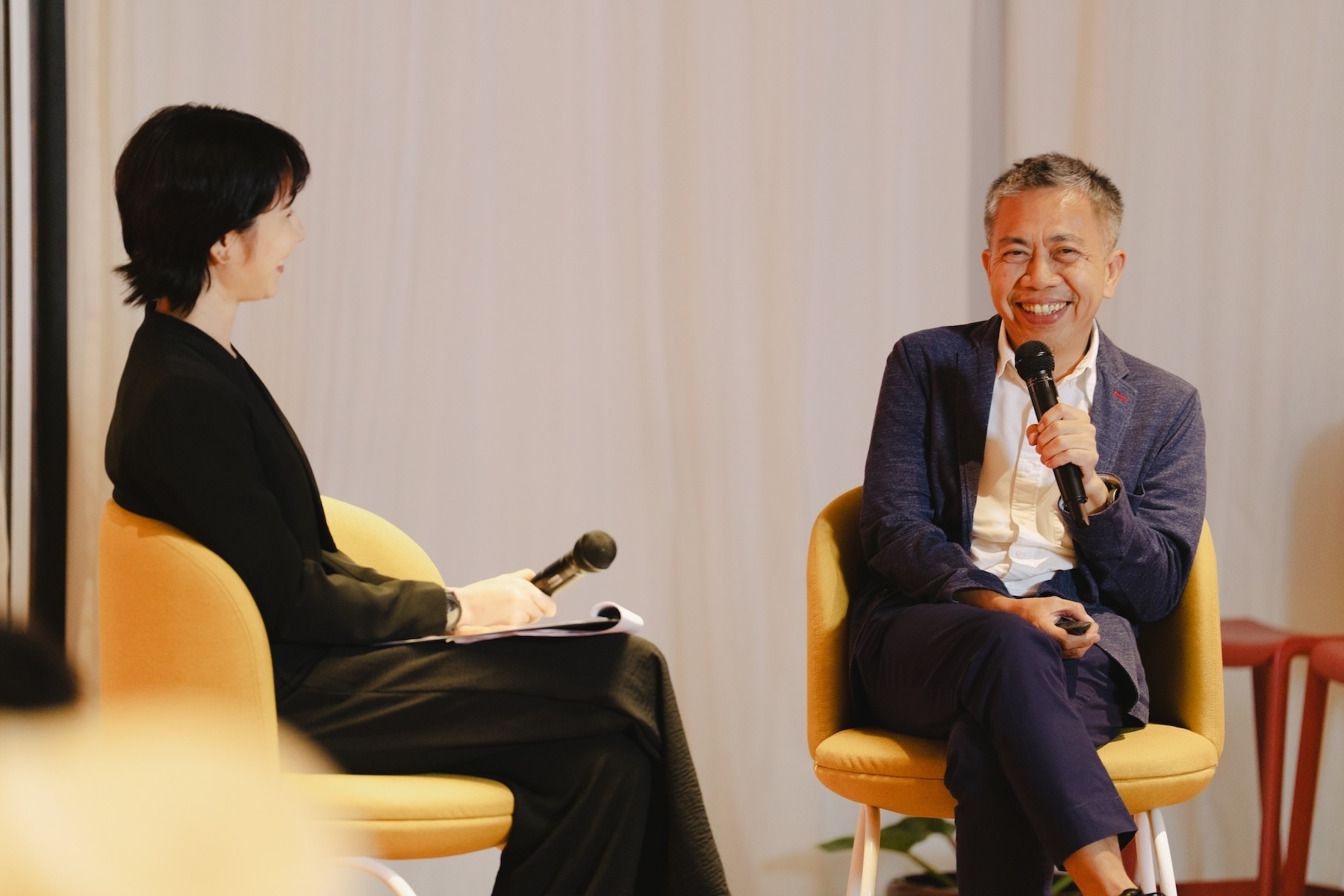
The salon commenced with presentations from renowned Taiwanese designer Aaron Nieh and architect Ya-hsin Tseng. Each shared their acclaimed award-winning works and practices in cross-cultural communication. Following their presentations, five top local Thai designers and architects joined the stage for a panel discussion. Ranging from the perspectives of "award collectors" who actively pursue international accolades to the mindsets of "hands-on pragmatists" who firmly believe that the essence of design requires no validation from awards, a compelling debate on honor, career development, and the very nature of design unfolded.
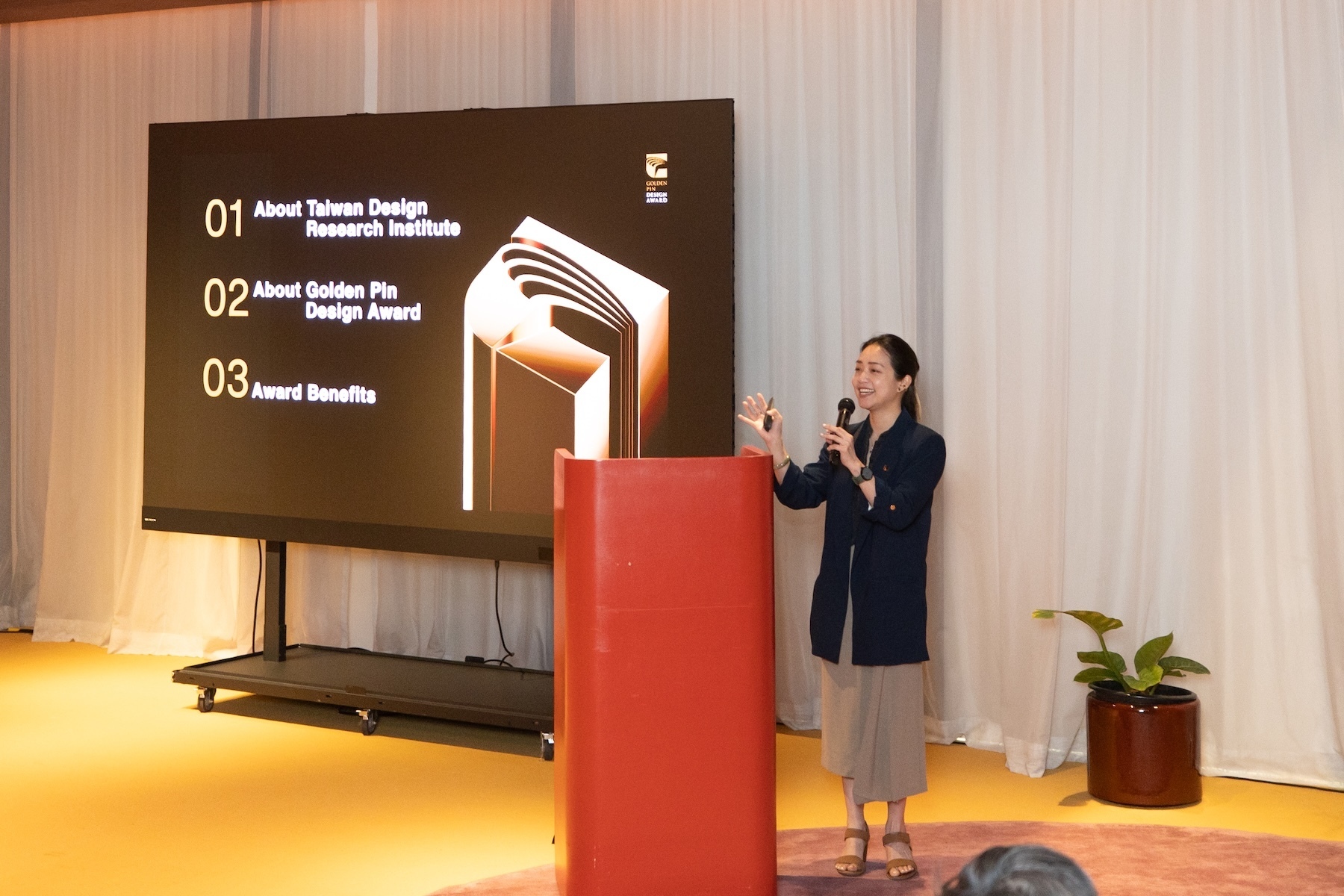
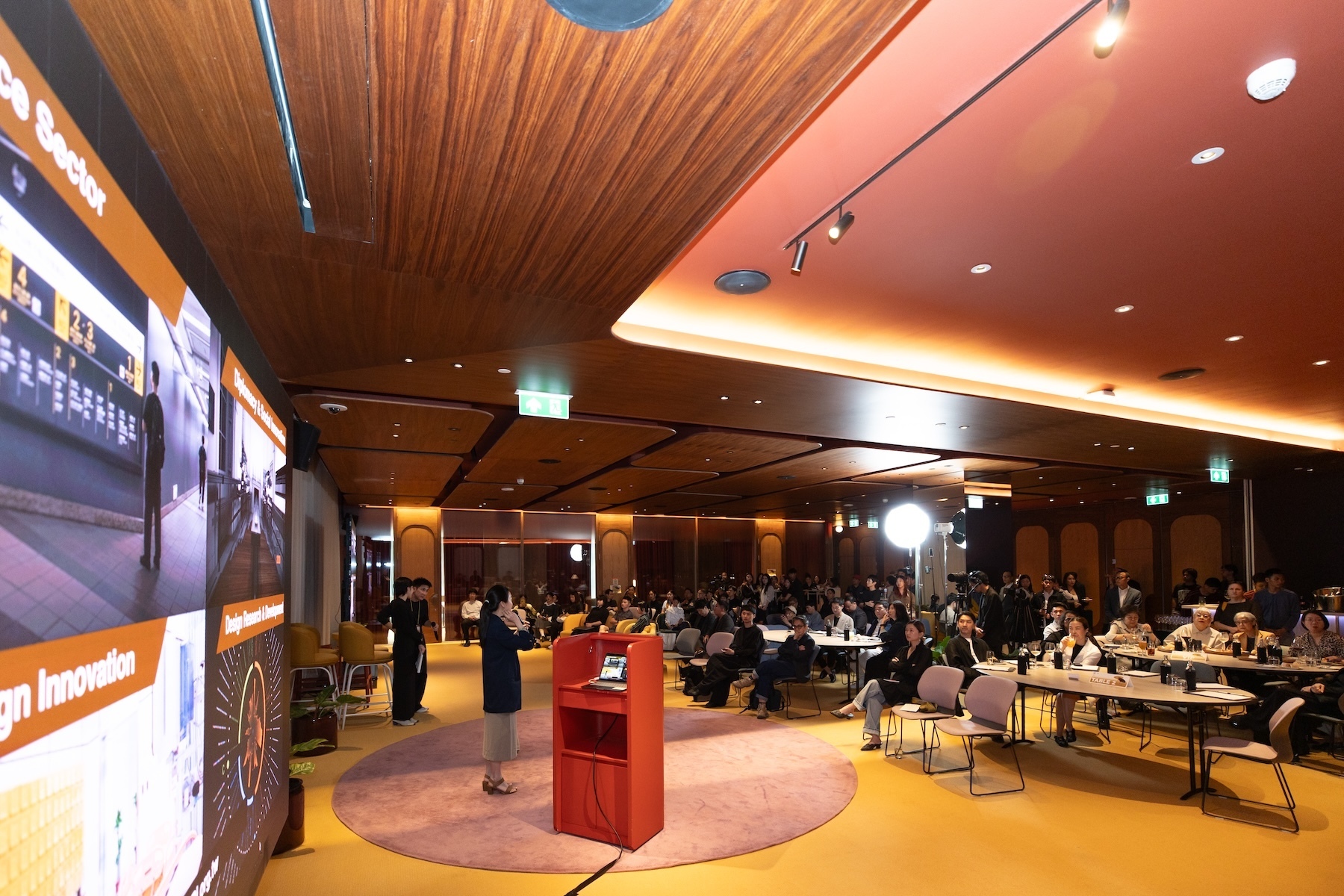
Ya-hsin Tseng: How Awards Help Us Review Our Work and Build a Clear Design Stance
Opening the salon was Ya-hsin Tseng, co-founder of hidden-domain studio. Reflecting their studio’s name, their philosophy lies in uncovering the intriguing narratives concealed within mundane things, with a portfolio spanning diverse scales from exhibitions and public spaces to architecture. As a rising studio, they have already garnered recognition from numerous international accolades. To this, Tseng believes that beyond expanding visibility for emerging teams, design awards represent a journey that allows designers to repeatedly articulate their concepts and firmly establish their professional stance.

Taking "Young Designers' Exhibition 2024: Beyond Sustainability - The Borrowing Project," which clinched the prestigious "Best Design of the Year" at the 2024 Golden Pin Design Award, as an example, they boldly challenged the issue of waste generated by temporary materials in short-lived exhibitions. Facing an exhibition period of a mere four days, they borrowed standard-sized lumber, log bundles, and bricks from timber mills and construction sites to stack and construct the pavilion. By utilizing the materials’ inherent structures and securing them with strap bands, they completely eliminated cutting and chemical adhesives. Consequently, when the exhibition concluded, every single material was returned completely intact to its origin, rendering the exhibition itself a brief yet brilliant interlude in the life cycle of these materials.
Tseng noted that this project, which has brought the studio the most recognition to date, also revealed how different awards evaluate design through distinct lenses. Some accolades emphasize the ingenuity of material selection and structural design; others value resource sharing between cross-industry stakeholders and local collaborators; while some focus on the ESG metrics and sustainability ethos manifested behind material circularity. These competition experiences have allowed the team to deeply understand how to read a project through pluralistic viewpoints.
Similarly, the submission process for "Siaosi Bansian: The StoryLine of Changhua City" prompted the team to reflect on how to navigate dialogues between global and local audiences. At Taiwan’s Golden Pin Design Award, they noticed that jurors paid attention to how the design connected with the local community, historical context, and public participation. Conversely, when competing in other international awards where the cultural background might not be instantly fully understood, the team pivoted to emphasize design methodology—the "line" itself serves as a spatial vocabulary of lightweight intervention—achieving a successful cross-cultural communication experience.
"Participating in awards makes the values we believe in clearer and connects us with like-minded individuals," Tseng concluded, reflecting on this trajectory. "Crucially, awards are not just external validation; they serve as a “calibration” process that forces our design team to question ourselves anew and clarify our self-worth." Observing how their work is interpreted from the outside is gradually guiding this young studio as they chart their own forward path.
Aaron Nieh: Why Do We Bother? Proving to Ourselves That What We Do Matters
The second speaker was graphic designer Aaron Nieh, the first Taiwanese member inducted into the Alliance Graphique Internationale (AGI). His studio, Aaron Nieh Workshop, boasts a portfolio spanning music albums, cultural projects, and brand identity. Renowned for his precise command of symbols and materials, Nieh constantly challenges the conventional boundaries of graphic design. Speaking from his dual experience as both a frequent competitor and a seasoned juror, Nieh structured his talk around a core question: "Why We Bother?"—leading the audience to reexamine the very essence of design awards.
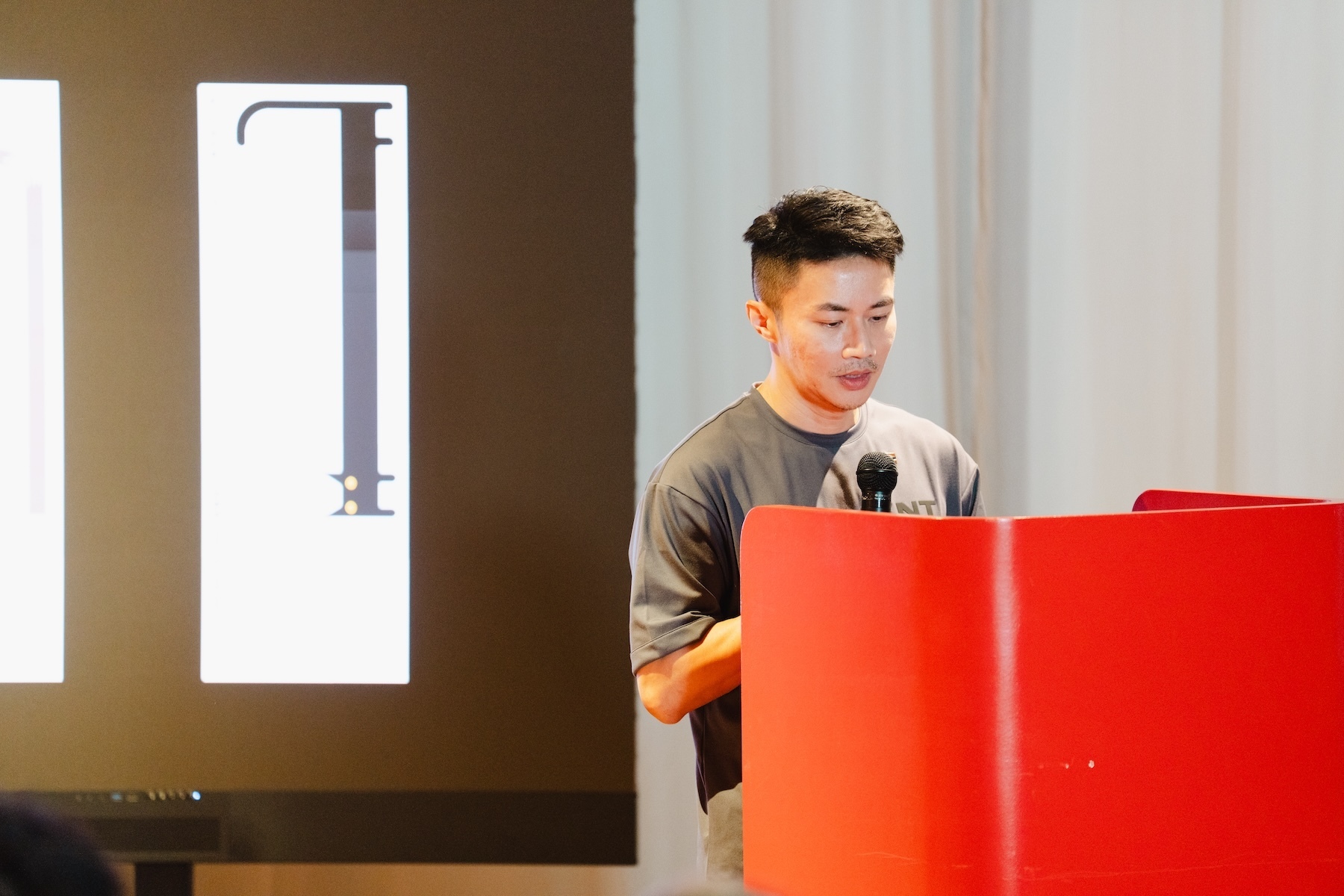
Nieh traced his journey through several of his projects that clinched the prestigious "Best Design of the Year" at the Golden Pin Design Award. He began with the "Young Designers' Exhibition—Visual Identity," demonstrating how a dynamic identity system and participatory design could interpret the theme of "Dialogue," enabling large-scale collaboration while driving massive engagement across social media. He then highlighted the visual identity created last year for the "Taichung Green Museumbrary"—a venue integrating a museum and a library. He shared how the team boldly started with highly refined, minimalist lines to establish a flexible identity system that both encapsulates the institution’s spirit and allows for versatile applications.
On a more intimate scale, his award-winning works in music albums and publishing—including the album design for Aaron Yan’s Metropolis and for One Song Orchestra, as well as the portfolio design for Fieldoffice—showcased an ultimate pursuit of craft. His team meticulously experimented with every detail, from paper selection and printing techniques to folding, die-cutting, and binding. Nieh emphasized that these winning projects prove recognition is never about the scale of the budget or project, but rather about the concept, the storytelling, the material selection, the quality control of details, and the attitude driving the work.
"Given that the entry fees and preparation costs for competitions are quite high, why do we still do it?" Nieh pulled the discussion back to the core. For him, entering awards is not merely about seeking external validation, but about proving to themselves: "What we do truly matters."
He acknowledged that while award outcomes are always unpredictable, every submission forces a team to look back, organize, and articulate their work. Through this repetitive questioning—"What matters most about this project?" and "What value do we hope others will see?"—designers can more clearly understand and establish their own internal standards. In the end, the ultimate destination of this persistence is simply a profound hope: that the values they so deeply believe in will be recognized somewhere in the world.
Jiravej Hongsakul: When a Project Gains Recognition, It Generates Trust
The third panelist to join the discussion was renowned Thai architect Jiravej Hongsakul (Pae). His firm, IDIN Architects, is celebrated for designs that respond to site context, with their flagship NANA Coffee Roasters series clinching consecutive major accolades at the Golden Pin Design Award. Jiravej recalled that when his firm was newly established, entering competitions was a way to explore how their work would be evaluated by international standards. As his experience grew, he realized that winning awards not only brings business benefits and builds client confidence, but also serves as a morale booster for the design team.
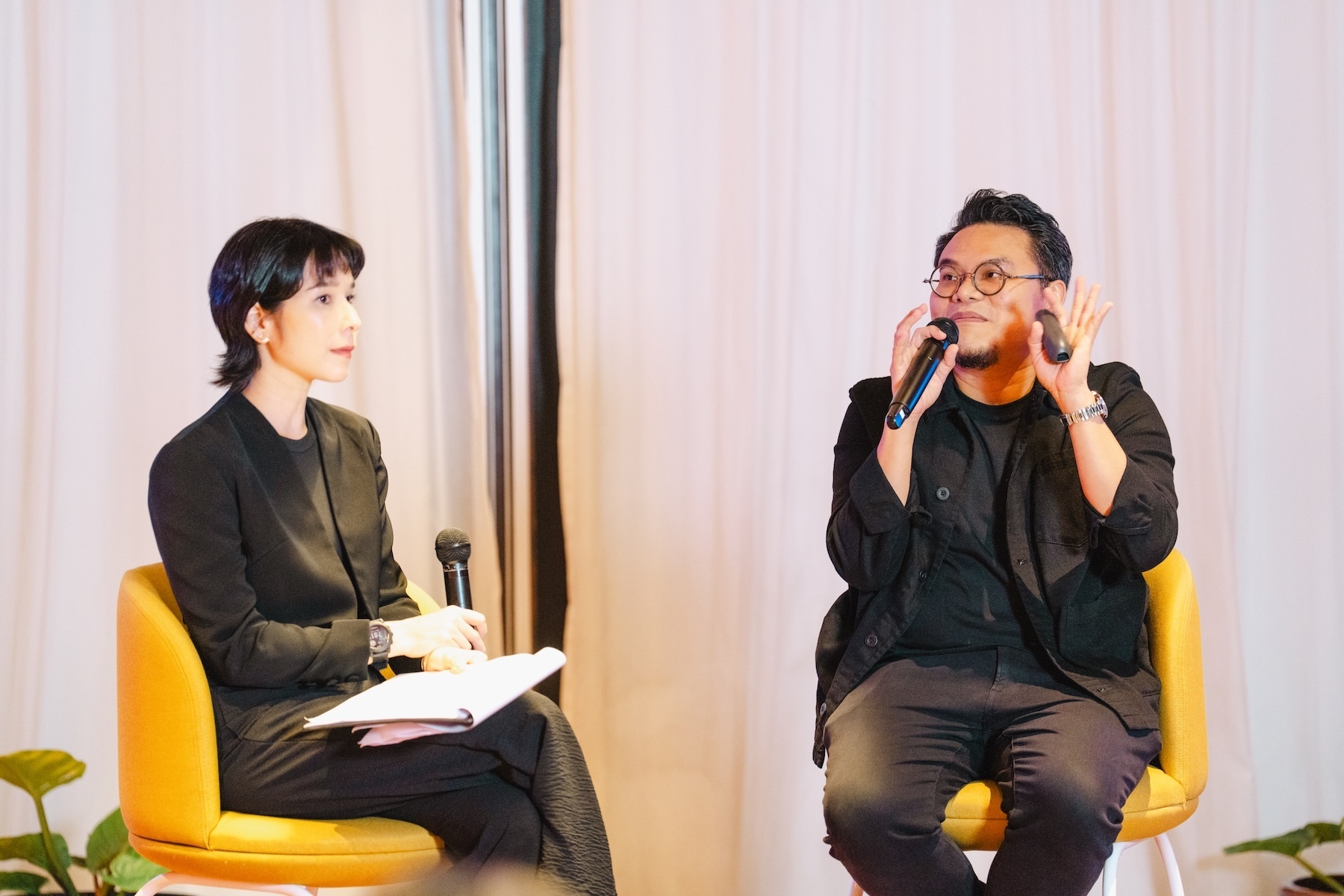
During the discussion, Jiravej shared a memorable experience. He had once submitted a project to a certain award, only to be eliminated in the very first round. Later, he submitted the exact same project to another competition. After clearly articulating the concept and the underlying thought process, the project ended up taking home the Gold Award. This turning point shattered his past assumption that "good design speaks for itself" and made him realize the critical importance of communication. If the narrative is not told clearly or the information provided is insufficient, it is difficult for jurors to fully comprehend the project's true value.
For young designers preparing their award submissions, Jiravej advised that from the initial problem statement and design concept to the final outcome, the communicated message must be precise, clear, and consistent. "A project might look simple, but behind that 'simplicity' lies multiple layers of thinking, research, and judgment. Designers must articulate these contents in a way that others can understand." He also cautioned that designers do not need to overcomplicate things just to appear clever; sometimes, a seemingly simple design can be incredibly powerful as long as it precisely solves a pain point that others have overlooked.
Reflecting on what awards mean for his career, Jiravej noted that architecture and design work is never easy; designers often invest a tremendous amount of effort, yet their work is not always understood. Awards, however, let designers know that someone has seen, understood, and recognized the value of their project. "Winning awards has indeed changed the way some clients view our work. Some clients who initially didn't have much interest in design became much more willing to discuss design, and more ready to invest ideas and resources after seeing the project win an award." He admitted that while not every client is familiar with or understands design awards, "when a project gains recognition, it generates trust, convincing clients that this direction is meaningful. This, in turn, gives designers more breathing room to develop their work."
Kittithanet Khajornrattanadech: Giving a Voice to the Unseen Efforts Behind Design
The fourth speaker was Kittithanet Khajornrattanadech (Him), founder of Taste Space, a studio specializing in food and beverage space design. Kittithanet, whose cafe project "PAGA Microroastery" previously won the Golden Pin Design Award, pointed out that the greatest challenge for interior design submissions is that photographs can only convey visual aesthetics; they struggle to capture the actual, lived spatial experience. Therefore, deciding which facets of a project to present in a submission tests a designer’s ability to distill the very essence of their work.
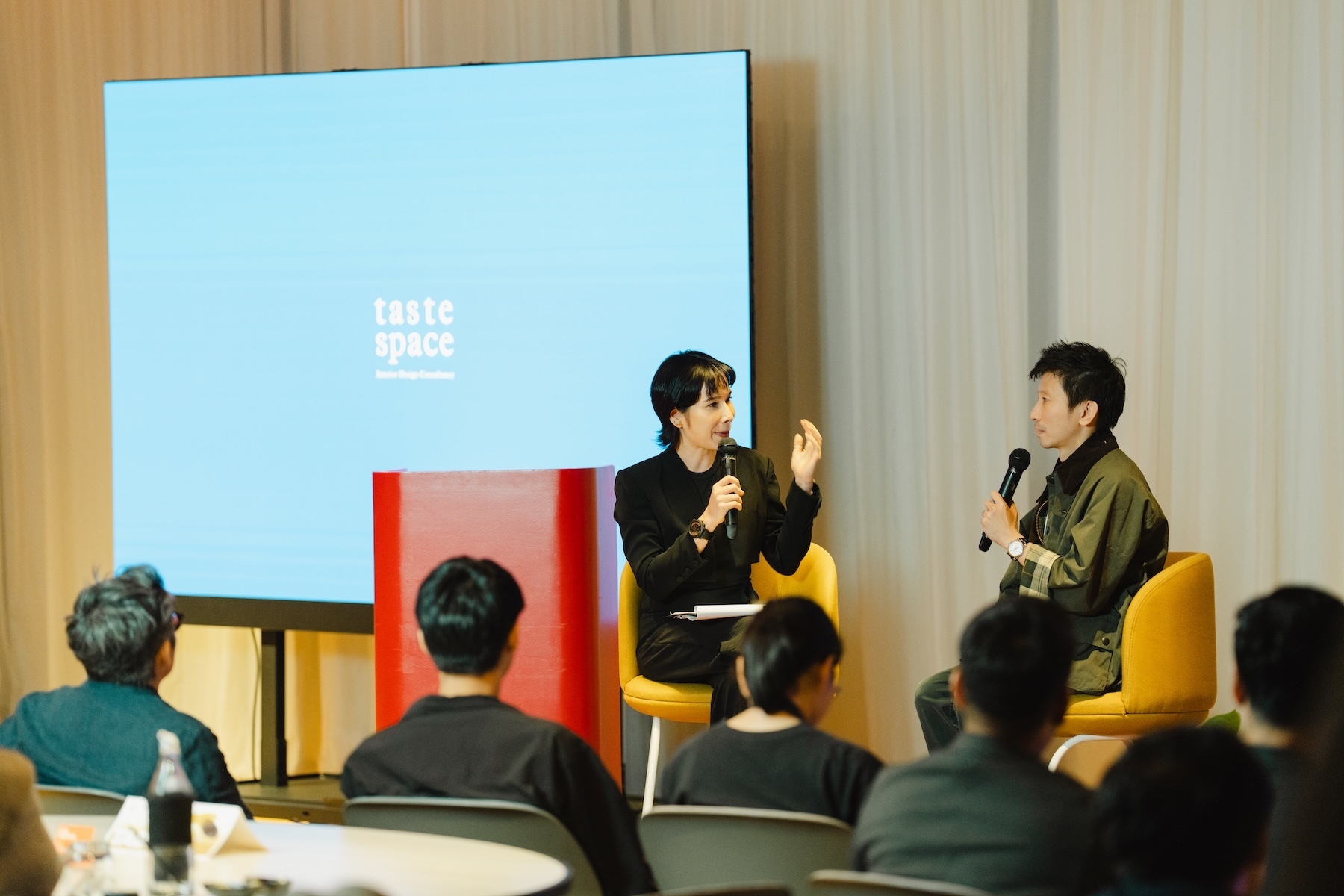
Using one of his cafe design projects as an example, Kittithanet shared how its hidden location prompted the team to think about how to guide people to notice the experience unfolding before they even stepped inside. They translated the entire coffee journey—from harvesting, drying, and roasting to brewing—into part of the spatial concept. Accurately communicating these invisible design thoughts and details through imagery, drawings, and text poses a significant challenge. "Every project has its own story, and we must find the clearest way to let the public and the jurors know that design is not just surface decoration or appearance. It is about how concept, function, and experience come together as a coherent whole."
When it came to how he views his work being evaluated on an international stage, Kittithanet shared an illuminating perspective. He emphasized that his team never intentionally employs decorative symbols just to make a project look "very Thai." Instead, they care deeply about whether they can create new ways of interpretation.
For instance, in an interior design project for a Thai restaurant in New York, they sought to translate Bangkok’s vibrant dining culture through materials, colors, and spatial vocabulary; although they didn't explicitly highlight Thai clichés, the design successfully evoked the lively energy of a Bangkok night market. The accolade they received proved that locality does not need to be bluntly showcased; when translated through design into texture, structure, atmosphere, or how a person feels within a space, it can be understood across different cultural contexts.
"Winning an award might not immediately change everything from a business perspective, but it certainly creates awareness," Kittithanet concluded. For him, the greatest tangible benefit of gaining international recognition is giving a voice to the unseen efforts behind a design. "To me, awards open up a dialogue. They spark curiosity, granting designers the opportunity to discuss the deeper meaning within their work."
Savinee Buranasilpin: Beyond Recognizing Designers, Awards Bring Stories and People to Light
The fifth panelist to share her insights was Savinee Buranasilpin (Pua), co-founder of thingsmatter. Coming from an architectural background, she refused to confine herself to the boundaries of conventional or commercial projects. Instead, she has led her team to fluidly navigate the "gray areas" between architecture, installation art, and spatial design. Savinee admitted that because the nature of their work moves beyond traditional definitions of interior design or architecture, they often struggle to choose a submission category when entering design competitions. However, it is precisely this commitment to exploring outside commercial constraints that has granted her the freedom to engage in cross-disciplinary exploration through structures, sites, and bodily experiences in public and exhibition spaces.
Her representative project "Field Work," which clinched a Golden Pin Design Award, perfectly exemplifies this practice of blending landscape and installation art to explore the relationship between people and land. Located in Pattani Province in southern Thailand, the site was once renowned for its thriving salt pans, a heritage that had gradually faded from public memory over time. Savinee led her team to work hand in hand with local residents, installing mirrored structures amidst the salt pans. By reflecting the sky, the earth, and the surrounding scenery, the installation transformed organically with the shifting light and human movement. This initiative not only successfully drew people back to step onto this land, but also reawakened the industrial memories deeply embedded within the landscape.
"During the exhibition, what touched me the most wasn't the work itself, but seeing the local people feel proud of their land once again," Savinee recalled emotionally. When news broke that "Field Work" had won the Golden Pin Design Award, the entire team was ecstatic, and the project ignited enthusiastic discussions and shares across social media.
For her, the validation of an international award transcends the temporal and spatial limitations of an exhibition, granting long-term visibility to what was originally a temporary landscape installation. It made the local community feel that their stories truly matter. "I believe this is one of the most vital roles an award can play," Savinee concluded. "Awards are not just about recognizing individual designers. They serve as a conduit that allows the people, the land, and the stories behind the work to be brought to light and seen by a much wider audience."
Theerachai Supamethikulwat: Awards Bring Spotlight, But a Product’s Core Value Matters Most
The sixth panelist to join the sharing was Theerachai Supamethikulwat (Jai), the design director and founder of Qualy. A pioneer in circular design and waste reduction practices in Thailand, Theerachai successfully transformed his family’s traditional plastic manufacturing business into an internationally acclaimed green design brand.
Having clinched consecutive major accolades, including the Golden Pin Design Award, with his "RE-UP Collection"—a furniture series crafted from recycled plastic—Theerachai spoke frankly from the dual perspective of a designer-manufacturer. He confessed that Qualy’s creations are never engineered for awards; rather, at the very inception of R&D, they holistically integrate concept, functionality, production processes, cost control, and long-term impacts on daily life. He emphasized that Qualy's philosophy is to reshape the negative narrative surrounding plastic. He firmly believes that eco-friendliness must be deeply integrated with functionality, ensuring that sustainability does not decline into superficial, late-stage commercial packaging.
During the discussion, Theerachai shared two compelling case studies. First, he observed that Thai people often rely on prayer during emergency crises such as earthquakes. This inspired him to create a wearable object that integrates religious faith with an emergency whistle. While this attempt initially felt sensitive in Thailand due to its religious undertones, it resonated deeply when submitted to a Japanese design award, leading him to realize how cultural contexts shape differing evaluation standards. Next, he drew inspiration from the traditional Thai food carrier. Instead of a replica of its form, he preserved its spirit, reshaping it with durable, washable, and microwaveable eco-friendly materials alongside modern functionalities. This move successfully allowed a traditional object, once dismissed by the local market as outdated and rustic, to morph into an everyday lifestyle essential for modern users.
In his closing summary, Theerachai concluded that while entering competitions can indeed instill market confidence in young teams and open up dialogues, "whether a project wins an award depends on many external contexts beyond a designer's control. The only things we can command 100% are our own determination, our meticulous attention to detail, and our thorough thinking when facing our work." He believes that the ultimate validation of design must always return to the product itself—whether it is practical and meaningful enough to bring real change to people's lives.
Siam Attariya: Beyond Experts, Resonating with the Public Matters Equally
The final panelist to grace the discussion was Siam Attariya, one of Thailand’s first AGI members and the design director of Pink Blue Black & Orange. With over 25 years of profound expertise, Siam has garnered numerous international accolades and recently spearheaded the visual identity for Thailand's bid to host Specialized Expo 2028. Reflecting on his career, Siam shared that in his youth, he was always eager to prove his design talent; however, after countless trials, he began to deeply realize that "design is not just self-expression, it is about responsibility." In his eyes, the mission of communication design extends far beyond making visuals look beautiful; it requires a precise understanding of the diverse expectations of clients, organizations, and target audiences, finding a balanced point that facilitates communication and accessibility among various stakeholders.
During the discussion, Siam shared his experience crafting the key visual for Bangkok Design Week. "When I work on designs for public communication, I try to think not just from a designer's perspective, but to place myself in the shoes of the general public." To overturn the stereotype that "Design Week events are merely the echo chamber for designers," he turned his gaze toward the grassroots creativity spontaneously driven by people—such as hand-painted street carts and modified motorcycles. By seamlessly weaving these elements into the key visual, he helped the public realize that design exists within ordinary, everyday objects, successfully drawing a wider audience from outside the design circle into the exhibition.
When asked how he views the role of awards, Siam, who has served as a juror for the Golden Pin Design Award, noted that for designers, awards can instill confidence and bring works to the attention of those outside the design community. "But to me, an award is also a way of self-reflection."
Drawing from his years of practical and judging experience, he believes that good design is not merely a question of style or aesthetics; it is about whether the work has a clear purpose, responds to human needs, and connects with people. Especially in the field of communication design, "if the audience cannot understand or feel a connection, the work is incomplete." He concluded by summarizing that validation for design does not come solely from awards or fellow designers—the public's standards matter equally, because he believes that great design can simultaneously converse with both experts and the public.
Taiwan-Thailand Design Dialogue Concludes and the 2026 Golden Pin Design Award Begins Its Final Countdown
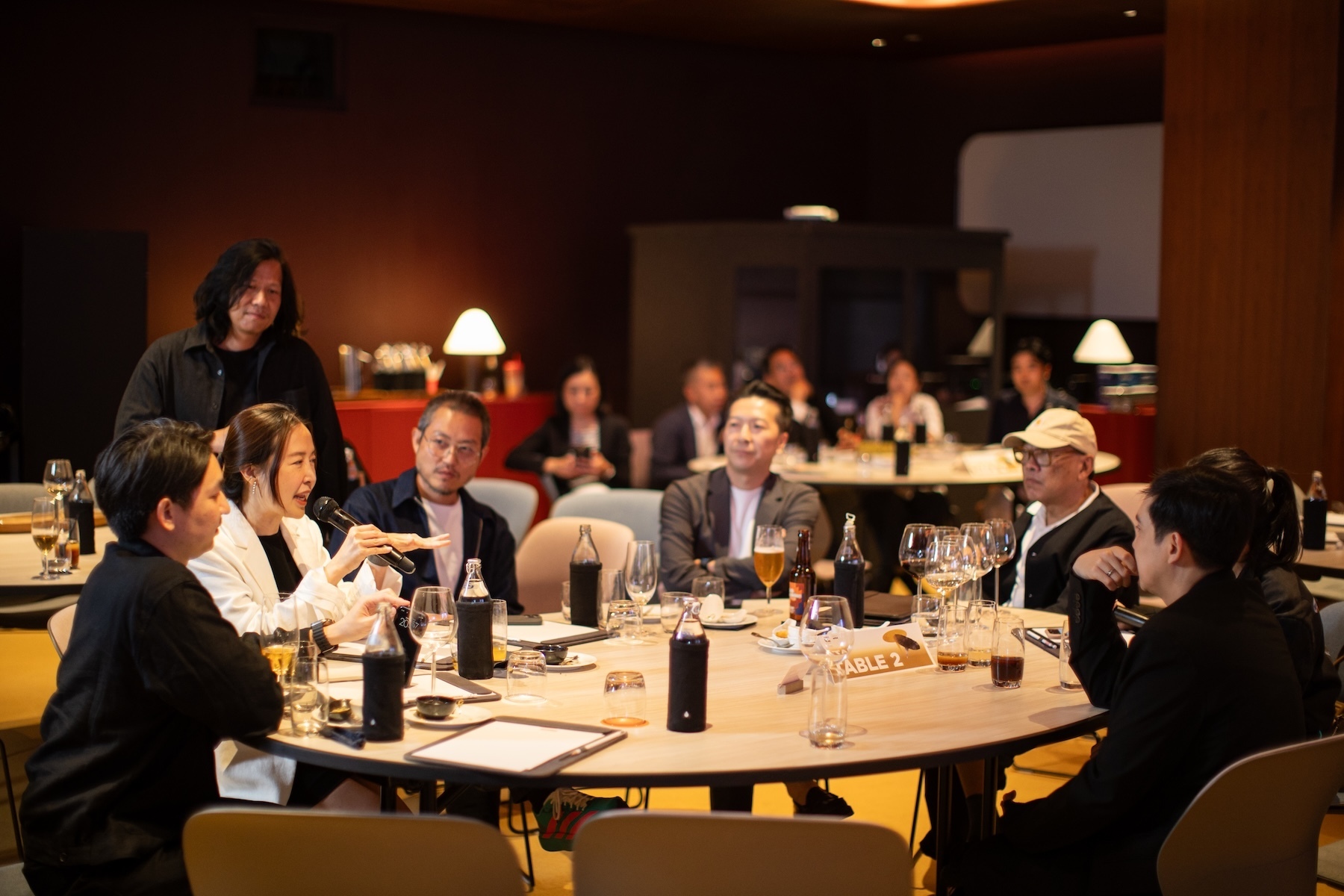
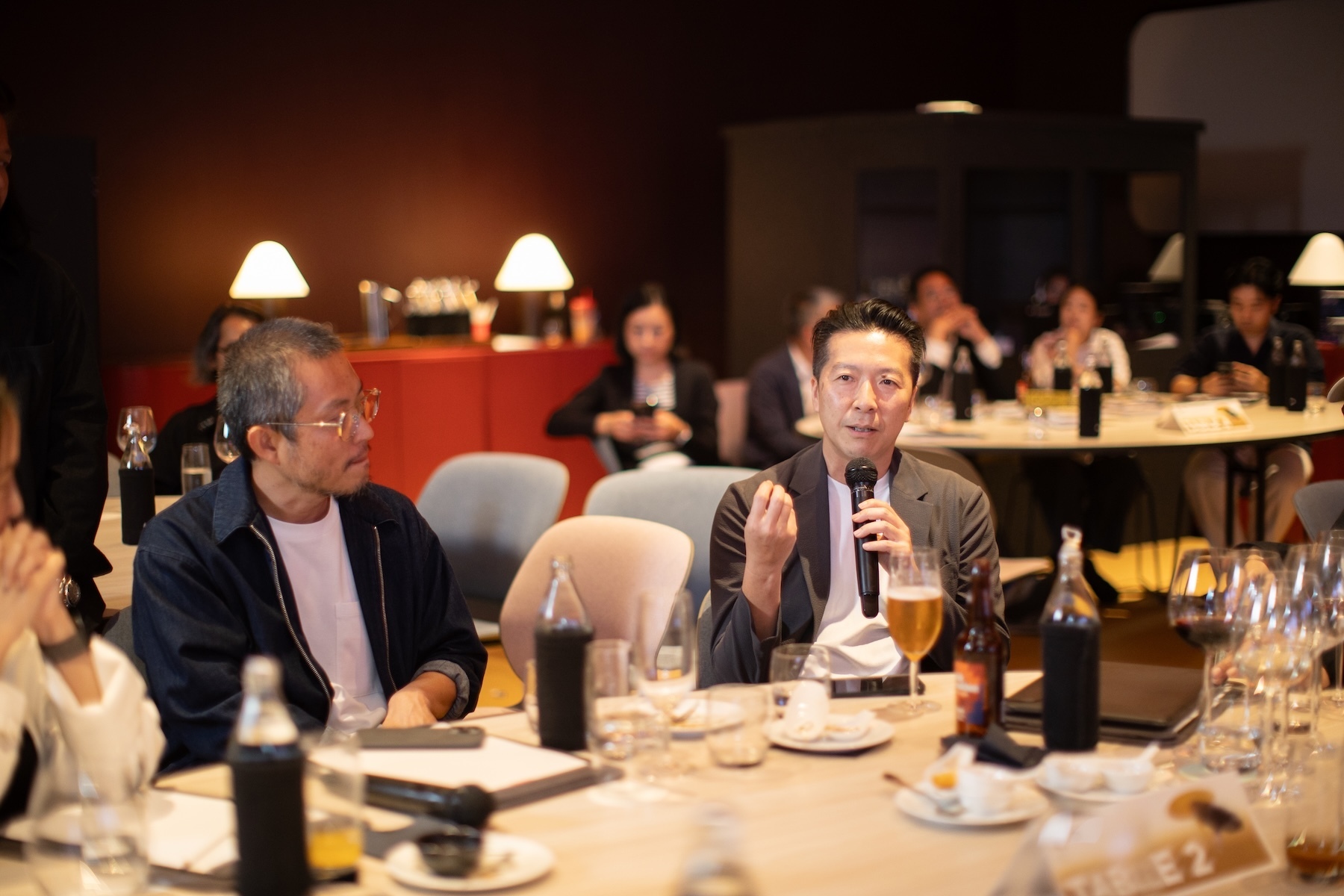
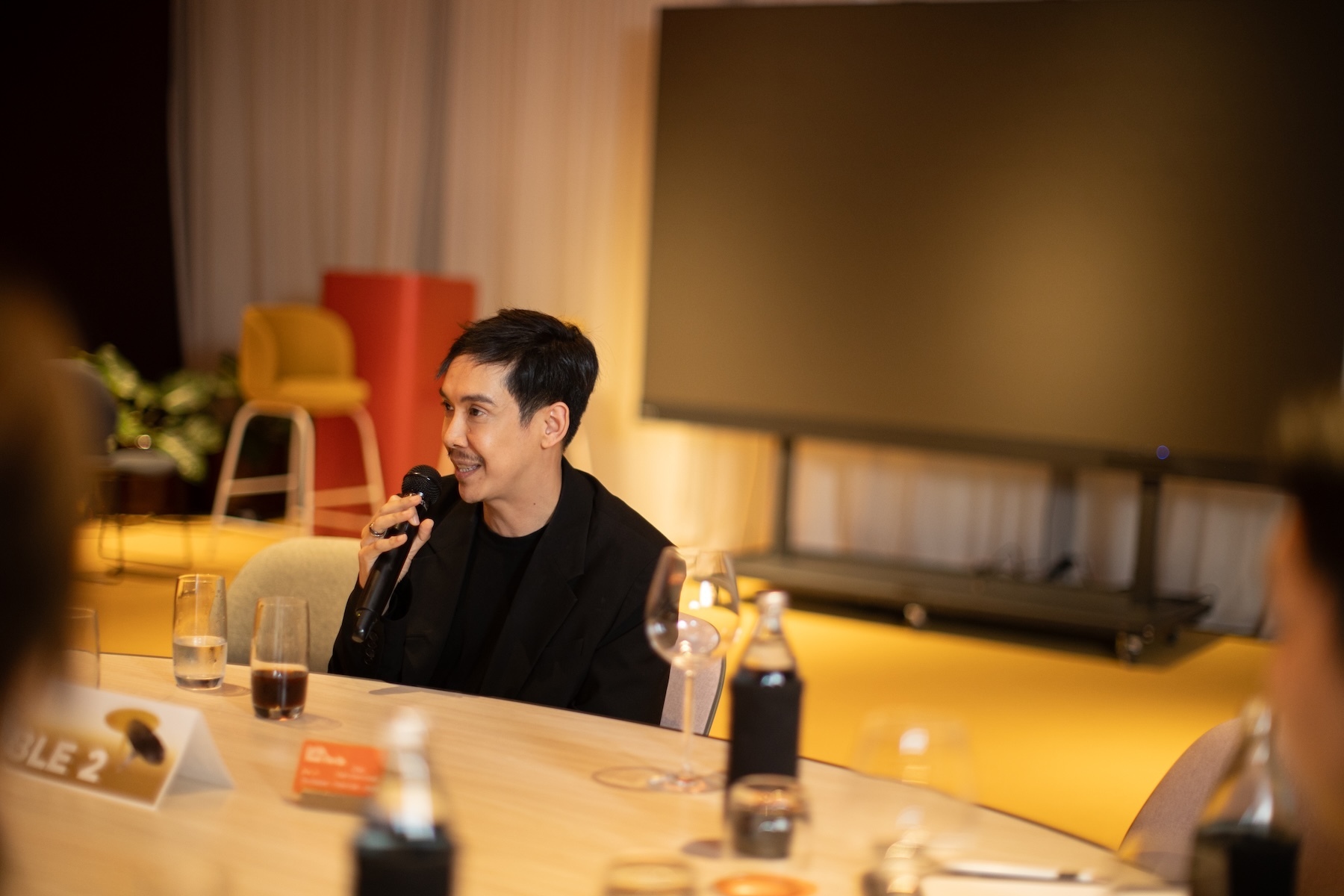
During the networking session in the latter half of the event, the floor opened to the audience, passing the microphone to the gathered Thai designers spanning architecture, interior, product, and communication design. Attendees spoke frankly about the rewards and struggles they experienced while vying for international accolades, extending the salon from a debate on "evaluation standards" into a heartfelt dialogue on design career development and self-worth.
Amidst enthusiastic discussions and a dynamic clash of perspectives, this year's Golden Pin Salon Bangkok edition drew to a spectacular close. Through this platform, we look forward to fostering more profound exchanges between Taiwan and Thailand in the future.
The full recorded live stream of the event is also available for playback on the official Golden Pin Design Award YouTube channel:
Furthermore, this international stage built for top-tier design is currently wide open to creators worldwide. The 2026 Golden Pin Design Award and Golden Pin Concept Design Award are now entering their final call for entries. The competitions span four major categories: Product Design, Communication Design, Spatial Design, and Integration Design. Winners will not only garnish prestigious honors but also unlock diverse opportunities, including international exhibitions, global media exposure, and business matchmaking.
Registration for this year's awards closes on June 15 (Mon.) at 17:00 (Taipei Time). Designers and enterprises from all sectors are cordially invited to seize this final window to submit their exceptional works and shine on the global stage.